
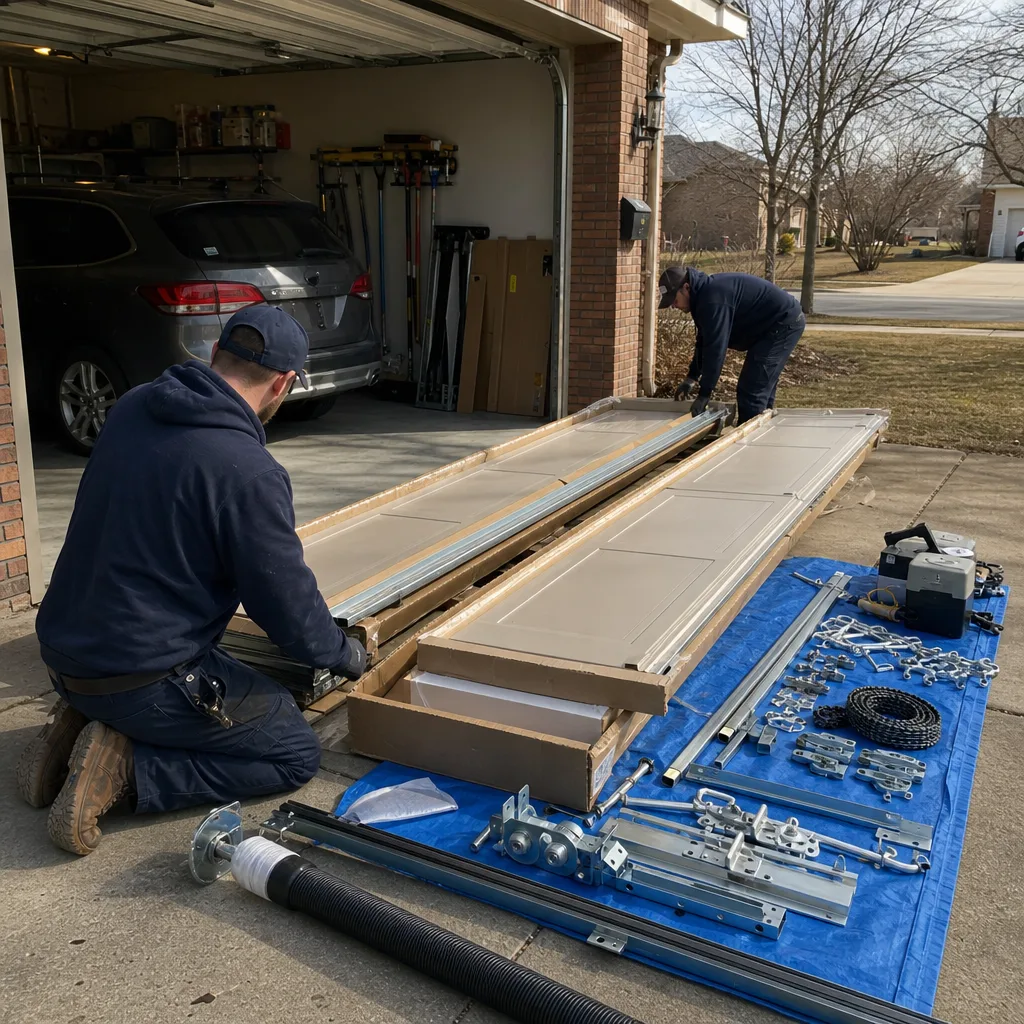
Last updated November 15, 2026
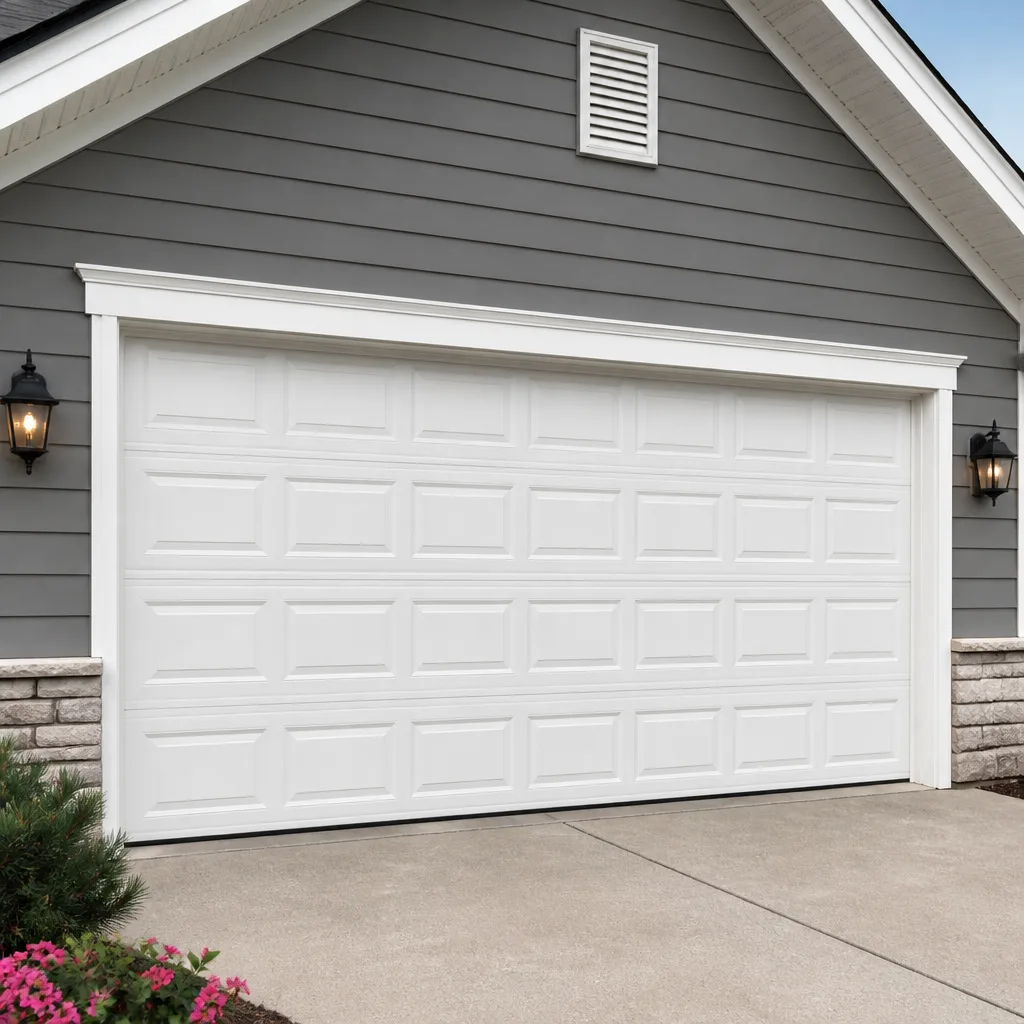 Raised-panel steel
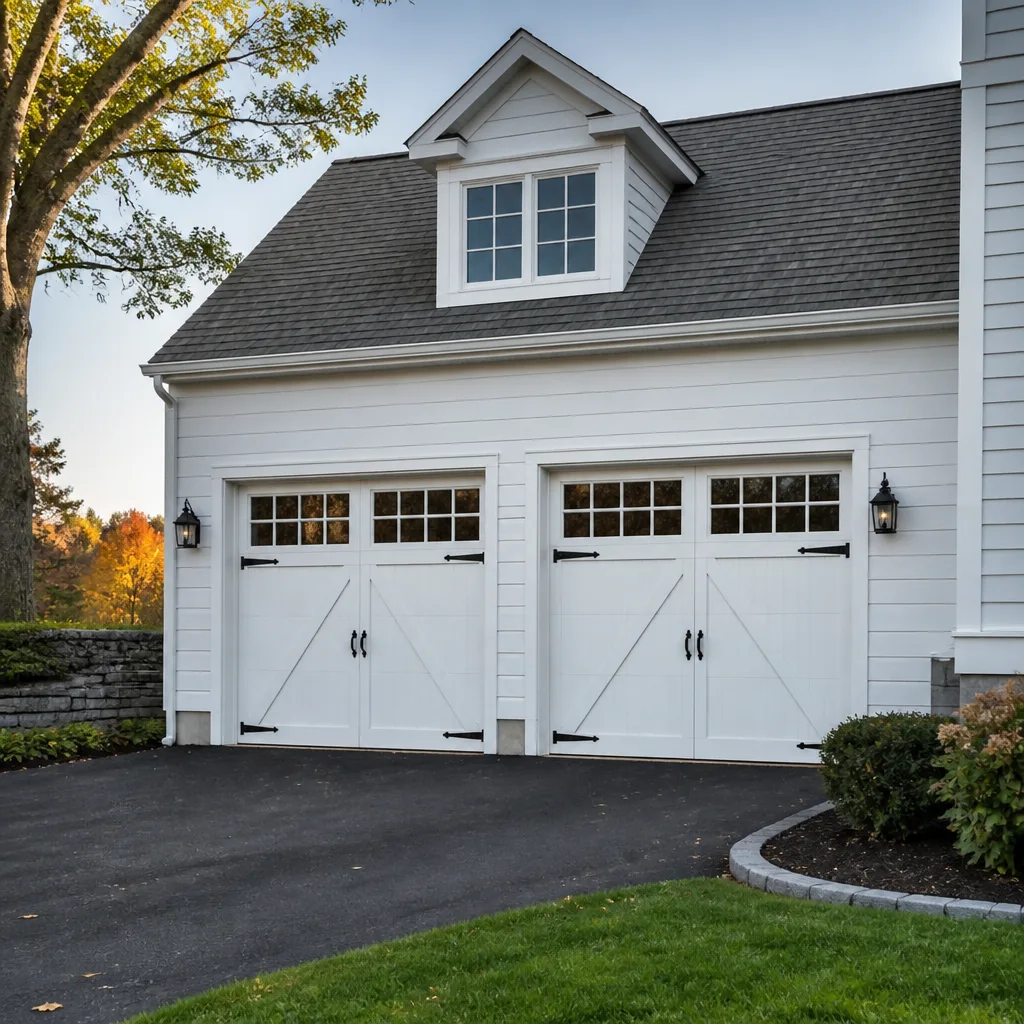 Carriage house
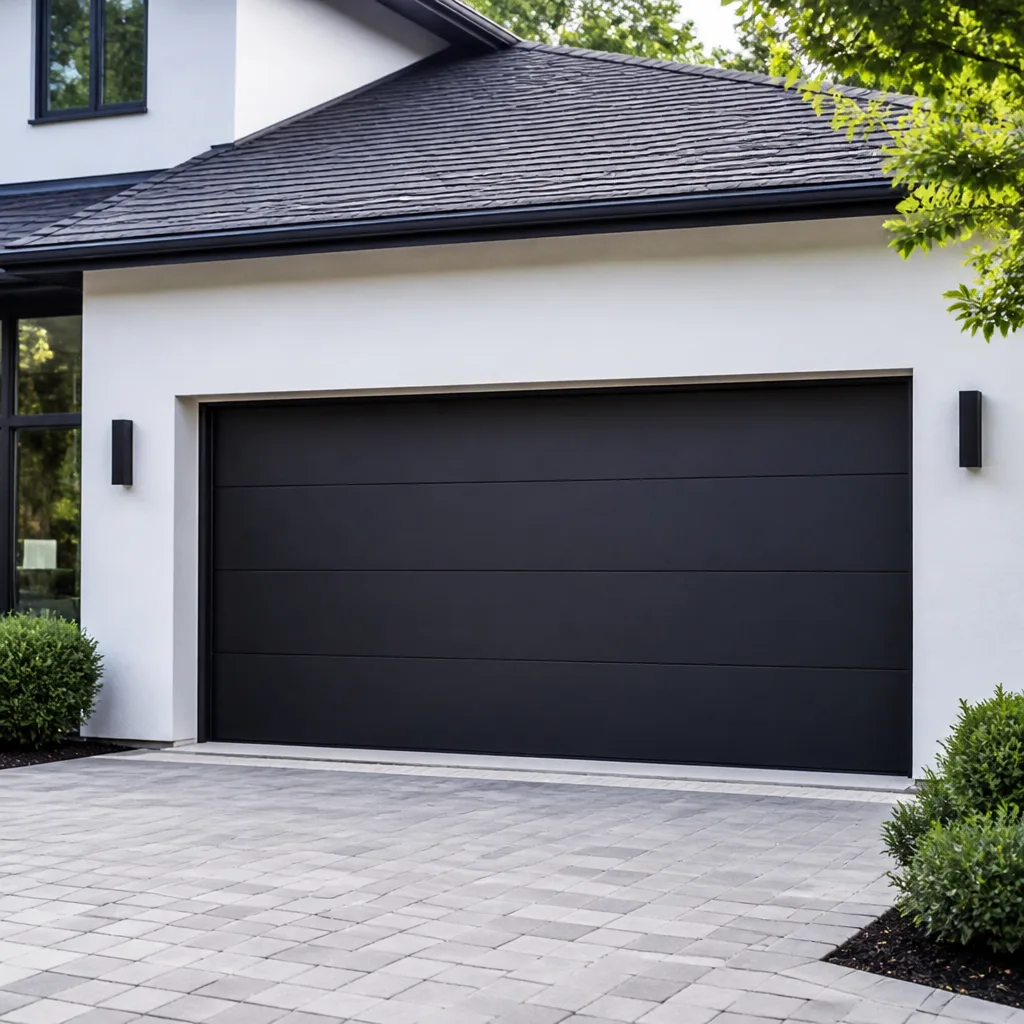 Modern flush
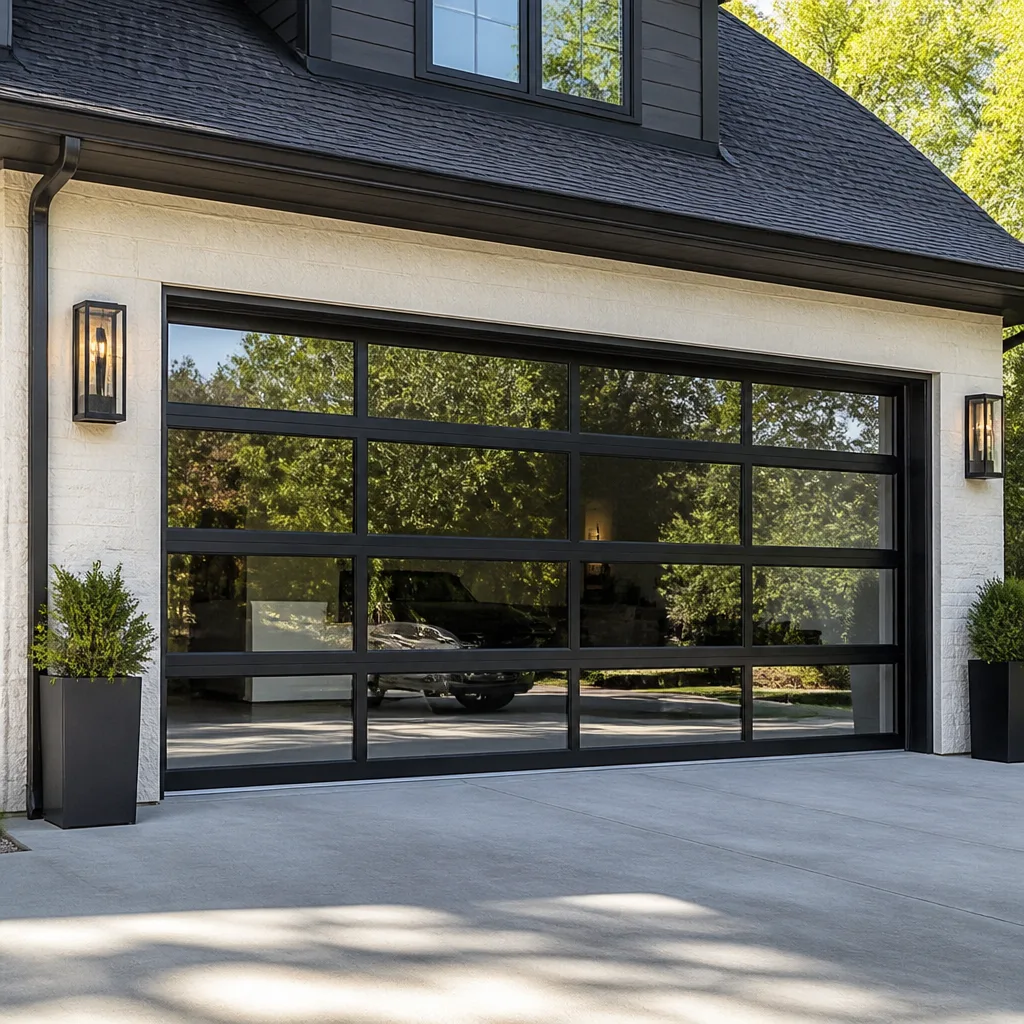 Full-view glass
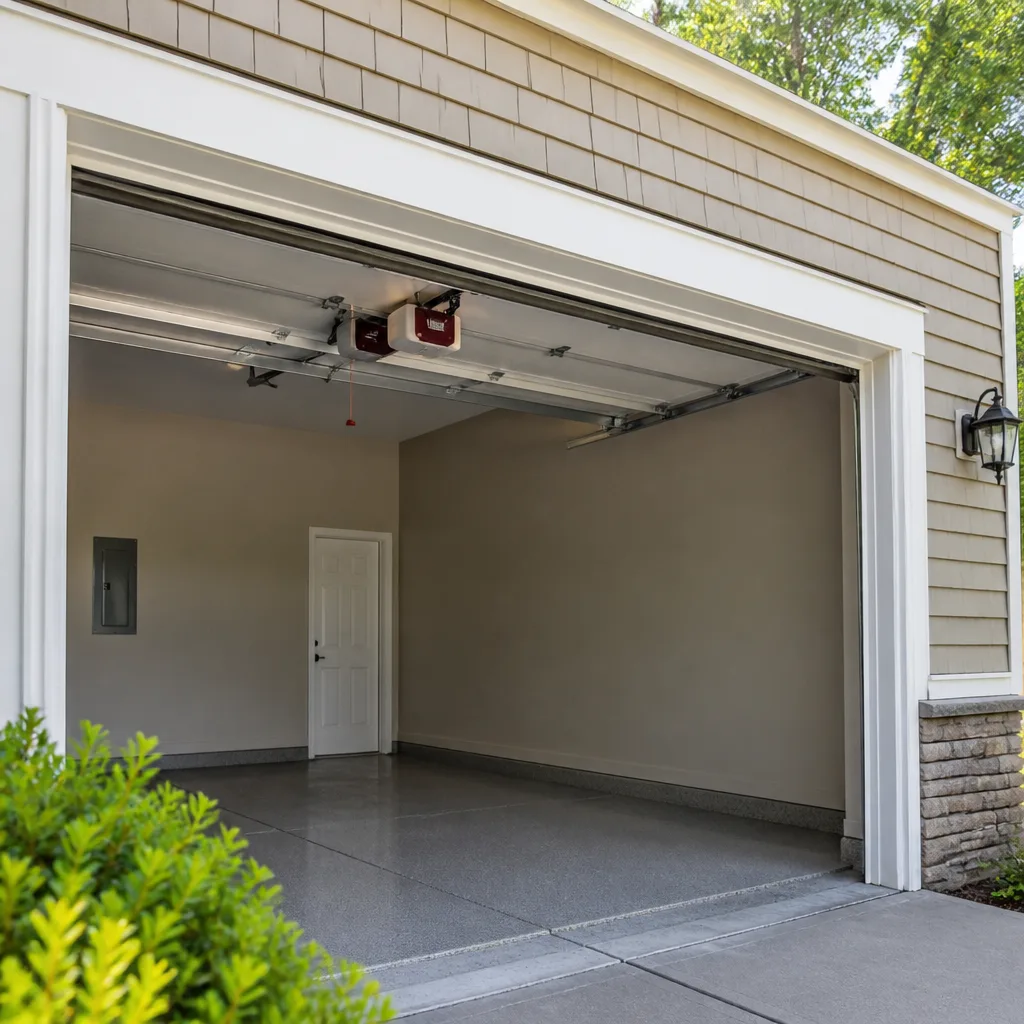 LiftMaster openers
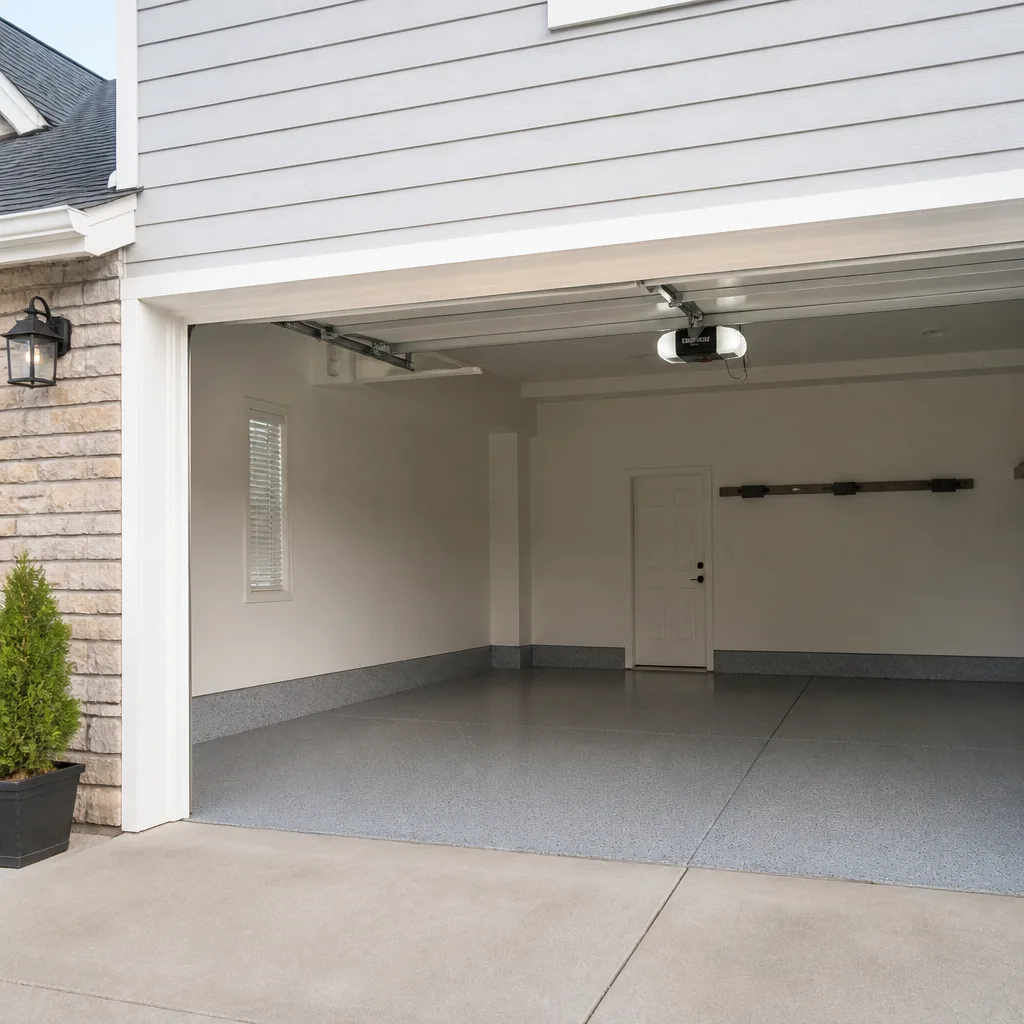 Chamberlain openers
Full 25-point door and opener safety check with every visit - springs, cables, rollers, tracks, and your LiftMaster or Chamberlain opener included
You get a price before we start. It does not change when the pro arrives.
Get your free estimateSeasonal Garage Door Care for Elgin: Year-Round Homeowner’s Guide
The most damaging moment for a garage door in Elgin isn’t the coldest day of winter. It’s the first hard freeze after a wet fall, when water that worked its way into seals and hardware expands overnight and doesn’t let go until spring. Most homeowners gear up for the deep cold and ignore the weeks before it, which is exactly backwards for a door in this climate. This guide maps specific care tasks to specific weather rather than handing you a generic monthly checklist. You’ll learn what fall prep really needs to cover, what sub-zero temperatures actually do to spring tension and lubrication, how freeze-thaw cycles telegraph spring problems months later, and the single mid-winter check that can keep a spring from failing during the worst possible week.
Quick Answer
Seasonal garage door care in Elgin follows four weather phases: fall prep against moisture before the first freeze, winter protection for springs and openers in sub-zero cold, spring inspection for freeze-thaw damage, and summer attention to humidity and electronics. The single highest-value habit is a monthly balance test and a visual seal check each October – those two tasks catch most problems before they turn into a repair bill that surprises you. Everything else is a matter of doing the right check in the right season instead of guessing.
Styles & brands we work with
- Raised-panel steel
- Carriage house
- Modern flush
- Full-view glass
- LiftMaster openers
- Chamberlain openers
Table of Contents
- Fall Prep in Elgin: Why October Matters More Than January
- What Sub-Zero Cold Actually Does to Springs, Grease, and Openers
- The One Mid-Winter Check That Prevents Most Spring Failures
- Spring Inspection: Catching Freeze-Thaw Damage Before Summer
- Summer Humidity, Wood Doors, and Keypad Contacts
- Matching Care to Your Door and Opener Brand
- Common Mistakes to Avoid
- When to Call a Professional
Fall Prep in Elgin: Why October Matters More Than January
October is the month that decides how your door fares all winter. Not January. The reason is water. Fall rain in Elgin soaks into weatherstripping, bottom seals, and the seams around hinges and rollers. When the first hard freeze arrives, that trapped moisture expands and pries those components apart from the inside. A door that goes into the freeze with dry seals and tight hardware has a far easier winter than one that carried water into the cold.
This is why weatherstripping and the bottom seal matter more in October than January. By January the water is already frozen or has done its damage. In October you still have time to intercept it.
Here’s what fall prep should cover on a door in this climate:
- Check the bottom seal. Press it along its full width. If it’s brittle, cracked, or flattened, it’s already letting water in and it won’t hold back the cold either.
- Inspect perimeter weatherstripping. Look at the strip around the opening, especially the sides facing prevailing rain. Gaps and tears are where water gets in before the freeze.
- Look at the hardware seams. Rust streaks around hinges and roller brackets tell you water is pooling where it shouldn’t.
- Clear the tracks of debris. Leaves and grit hold moisture against the door and stop rollers from moving freely.
- Test the door balance. A door that’s harder to lift than it should be signals a spring that’s already working too hard, and cold will make it worse.
A note on safety: the torsion springs and cables above a garage door are under enormous tension, and a worn part can let go suddenly. Don’t loosen, adjust, or remove any spring or cable yourself. A trained technician handles those. The seal and debris checks above are safe for you to do; anything that means touching tensioned parts calls for a professional.
If your weatherstripping is shot going into October, it’s worth fixing it before the first freeze rather than after. A quick call for garage door repair can get it sorted while the weather is still on your side.
What Sub-Zero Cold Actually Does to Springs, Grease, and Openers
Deep cold changes how a door physically works, and knowing the difference between “adjustable” and “wait it out” saves a lot of pointless worry. Steel springs get stiffer in cold, so a door that lifted easily in September needs a bit more opener force in January. Lubricant thickens and rollers drag. An opener that isn’t adjusted for the season can strain against a door that isn’t moving as freely as it did in fall.
Some of what you feel in winter is genuinely fixable. Some isn’t. Here’s the honest breakdown:
- Adjustable: Thickened grease is fixable – a cold-rated lubricant on tracks, rollers, and hinges goes a long way. An opener’s force setting is often adjustable so it doesn’t fight a stiff door. A door that’s noticeably binding is worth a look, because it’s usually a mechanical issue, not just the cold.
- Just wait it out: A steel door feeling heavier, a slightly slower start on a very cold morning, and small creaking as metal contracts. These are normal and pass with the weather. Chasing them with constant adjustments can actually throw a door out of tune.
One thing worth flagging: sub-zero cold makes any pre-existing weakness worse. A spring that’s near the end of its life in November often fails in January. That’s not because the cold broke a good spring – it’s because the cold pushed a tired one over the edge. Recognizing that ahead of time is the whole point of a mid-winter balance check, which we cover next.
If your opener is straining or short-cycling in the cold, the problem may not be the door at all. A LiftMaster or Chamberlain unit that’s undersized or miscalibrated should be checked by someone fluent in that system; our garage door opener repair service covers exactly this kind of cold-weather troubleshooting.
The One Mid-Winter Check That Prevents Most Spring Failures
The single most useful thing you can do in mid-winter is the door balance test, and it takes about a minute. The idea is simple: disconnect the opener so the door moves by hand, raise it partway, let go, and see whether it stays put. A balanced door stays where you leave it. A door that creeps or drops on its own is telling you the springs are losing tension – and a spring that’s losing tension in January is a spring that often breaks in February, during the week you least want a door stuck shut.
Here’s how to run it safely:
- Close the door fully and pull the opener’s manual release cord so the door is disconnected from the motor.
- Lift the door by hand to about waist height – slowly, keeping clear of the path.
- Let go gently. A healthy door holds its position or barely drifts. A door that drops is a warning sign.
- If it drops, don’t try to compensate by cranking up the opener force or by raising the door by hand repeatedly. Book a technician to check the springs.
- Reconnect the opener only after you’re confident the door is balanced, then run it through a full open-close cycle to confirm it travels smoothly.
We’ll repeat the safety point because it matters: this test is done by hand and never involves reaching for a spring or cable. The test tells you whether something is wrong. It does not tell you how to fix the spring, and that’s deliberate. Springs under tension are dangerous to work on without the right tools and knowledge, and a trained technician is the right person for the job.
If the door drops or feels unbalanced in the cold, call (844) 320-7553. We answer 24/7, and fast dispatch from 7am to 7pm means a technician can look at it before it fails entirely. Free estimates, and you’ll know the price before any work starts.
Spring Inspection: Catching Freeze-Thaw Damage Before Summer
Spring in Elgin is a freeze-thaw season, and that cycle is quietly rough on a garage door. Water that got into a seal or a hardware seam in fall freezes and thaws, over and over, widening small gaps and loosening fittings. The damage is often invisible until it fails in summer, when you least expect it. A spring inspection is your chance to catch that damage while it’s still cheap to fix.
Every spring thaw is a stress test. Here’s what to look at when the ground thaws:
- Bottom seal and weatherstripping: Look for new cracks, separation, or sections that no longer sit flush. Freeze-thaw is where those cracks start.
- Hinges and roller brackets: Wiggle them. Loose or rusted hardware is a sign moisture has been working in and out all winter.
- Door panels and paint: Fresh bubbling, flaking paint, or rust spots on steel panels often mean trapped moisture. Wood doors may show swelling or split joints.
- Tracks: Check for dents, out-of-plumb sections, or debris left over from winter storms.
- Springs: Visually check for gaps or a stretched look, but don’t touch. If anything looks off, that’s a technician call.
Run the balance test again in spring, too. It’s the same check as mid-winter, and it gives you a baseline against which to spot future changes. A door that stays put in April but starts drifting by July is telling you something loosened up.
Freeze-thaw is also a reason to think about the door’s age honestly. If it’s been through several Elgin winters and the seals keep failing, sometimes the smarter move is a plan for eventual replacement rather than another patch. That’s a decision to make on facts, not fear – and we’ll cover how a brand match makes that easier further down.
Summer Humidity, Wood Doors, and Keypad Contacts
Summer in this part of Illinois brings humidity, and humidity attacks a garage door in ways the cold never does. Wood doors swell and shrink through the year, and the humid months are when joints move, paint lifts, and panels can begin to warp if the moisture goes unchecked. Painted steel doesn’t swell, but moisture trapped under the paint or in the seams is what starts a rust spot that’s easy to ignore in July and impossible to ignore by fall.
Electronics are the other summer weak point. Keypad contacts and opener connectors can corrode or film over in humid conditions, which is why a keypad that “just stopped working” after a muggy spell often isn’t broken – it’s dirty. A soft wipe of the keypad surface and a check of the wire connections usually gets it back. If your opener is a connected system, like a LiftMaster or Chamberlain with the myQ app, humidity-related connectivity glitches sometimes clear with a simple re-pair, but a unit that keeps dropping needs a look at the wiring and the unit itself.
Here’s a practical summer routine:
- Wipe down the keypad and dry it fully – do not soak it.
- Check the wiring at the opener head for loose or corroded connections.
- Inspect painted steel for rust spots or paint bubbling, and touch up small spots before they grow.
- On wood doors, check for swelling at joints and re-seal any bare or cracking finish.
- Lubricate tracks, rollers, and hinges so the door runs smoothly through the hot, dry stretch too.
Summer is also a good time to confirm your door safety features are working – that the opener reverses when it meets an obstacle and that the photo-eye sensors are aligned and clean. Those are your first line of defense and a quick check keeps them reliable.
Matching Care to Your Door and Opener Brand
Different systems need slightly different care, and knowing your brand tells a technician a lot before they even arrive. That’s why we ask, when you call, what you’ve got. We work on what you already have rather than steering you toward a replacement – repair first, and replacement only when it genuinely makes sense.
Here’s how brand awareness changes the conversation for common systems in Elgin homes:
- Raynor doors: Common in this region, and worth keeping parts matching to the existing door so you preserve fit and finish through repairs.
- LiftMaster and Chamberlain openers: Often connected systems, so care includes the myQ app and connectivity alongside the mechanical parts.
- Genie openers: Legacy and budget systems that need a technician familiar with their force and limit adjustments – not every tech knows them well.
The reason brand fluency matters for seasonal care is diagnostic speed. When we know you have a Genie opener, we bring the right knowledge to a cold-weather force adjustment. When we know the door is a Raynor, we can talk about matching parts without a back-and-forth. Eight brands, one number to call – and that number is (844) 320-7553.
Our technicians have up to 11 years of experience, and Ridgeway Garage Door Repair is equipped to service products from LiftMaster, Chamberlain, Genie, Clopay, Amarr, Wayne Dalton, Craftsman, and Raynor. Your system, our specialty. If you’re in Elgin, it’s a local call. You can learn more about who we are on our Ridgeway Garage Door Repair page.
Common Mistakes to Avoid
- Waiting until the first freeze to address seals. By then the water is already trapped and expanding. Elgin’s wet fall is the window to act, not the deep cold of January.
- Oiling only the big moving parts and ignoring the bottom seal. The seal keeps water out, and skipping it means you’re protecting the mechanism while letting the enemy in through the floor line.
- Raising the opener force to muscle through a winter-stiff door. Cranking up force on a door that’s actually binding can damage the opener and the door itself. Fix the cause, don’t overpower the symptom.
- Ignoring the balance test because “it still opens.” A door that opens but is losing balance is a door heading for a spring failure. The test is free and takes a minute; the failure doesn’t.
- Assuming a dead keypad is broken. After humid spells, contacts and connections are often just dirty or loose, and a check or a re-pair saves a needless replacement.
- Letting a small rust spot ride through the summer. Under humidity, a touch-up job in July is far cheaper than a panel replacement in December.
- Skipping the spring inspection because the door “feels fine.” Freeze-thaw damage builds quietly. A visual check and a balance test in spring catch what a feeling test won’t.
When to Call a Professional
Some tasks are homeowner-friendly – the balance test, the seal check, the keypad wipe, clearing the tracks. Others genuinely need a pro, and knowing which is which protects both your door and you. Call a professional when a door drops during the balance test, when a spring looks stretched or shows a gap, when the door binds or jerks through any part of its travel, or when an opener short-cycles, reverses unexpectedly, or won’t hold its force setting in the cold. Also call if a panel is dented, if a track is bent, or if your sensors won’t stay alignmed.
Ridgeway Garage Door Repair offers free estimates in Elgin – call (844) 320-7553. We answer 24/7, with fast dispatch, 7am-7pm, Sunday through Friday. You’ll get a written estimate and the price is agreed before any work starts, so there are no surprises afterward.
See the difference
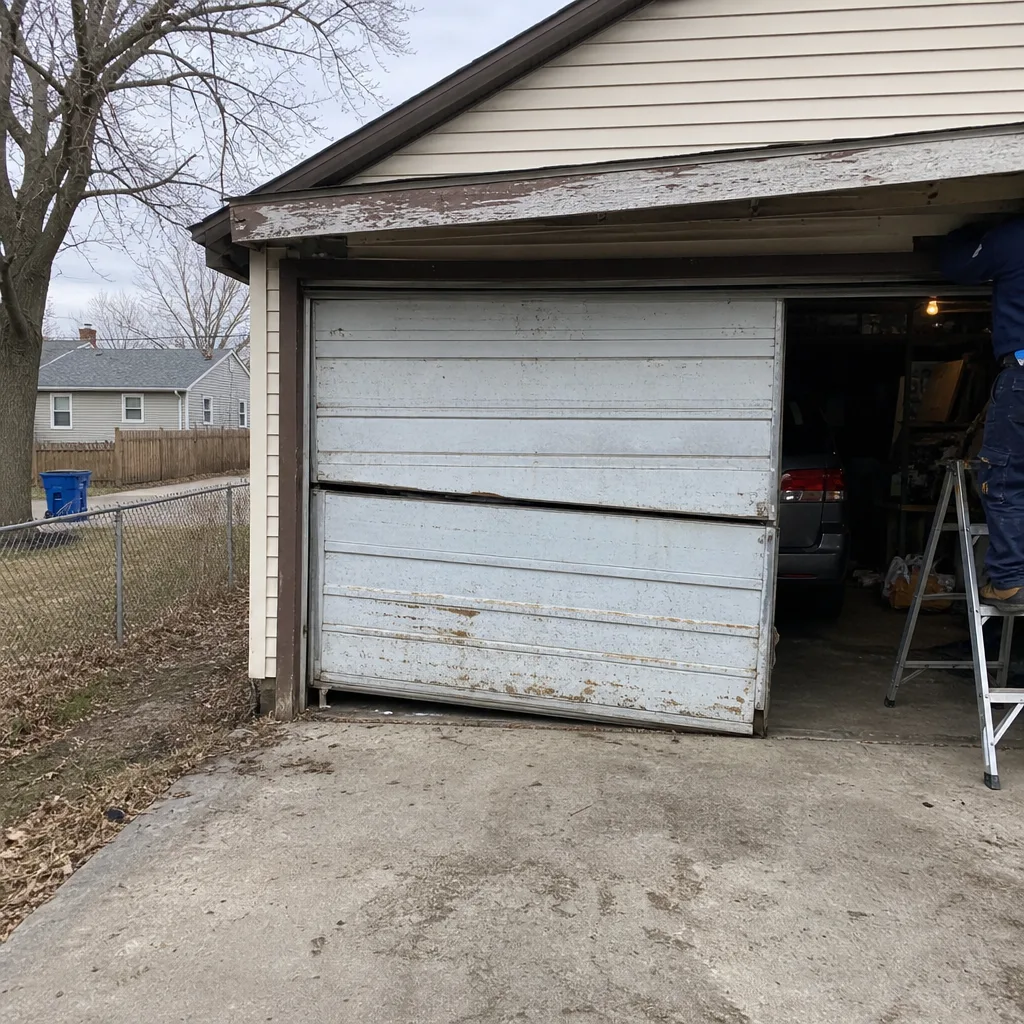 Before
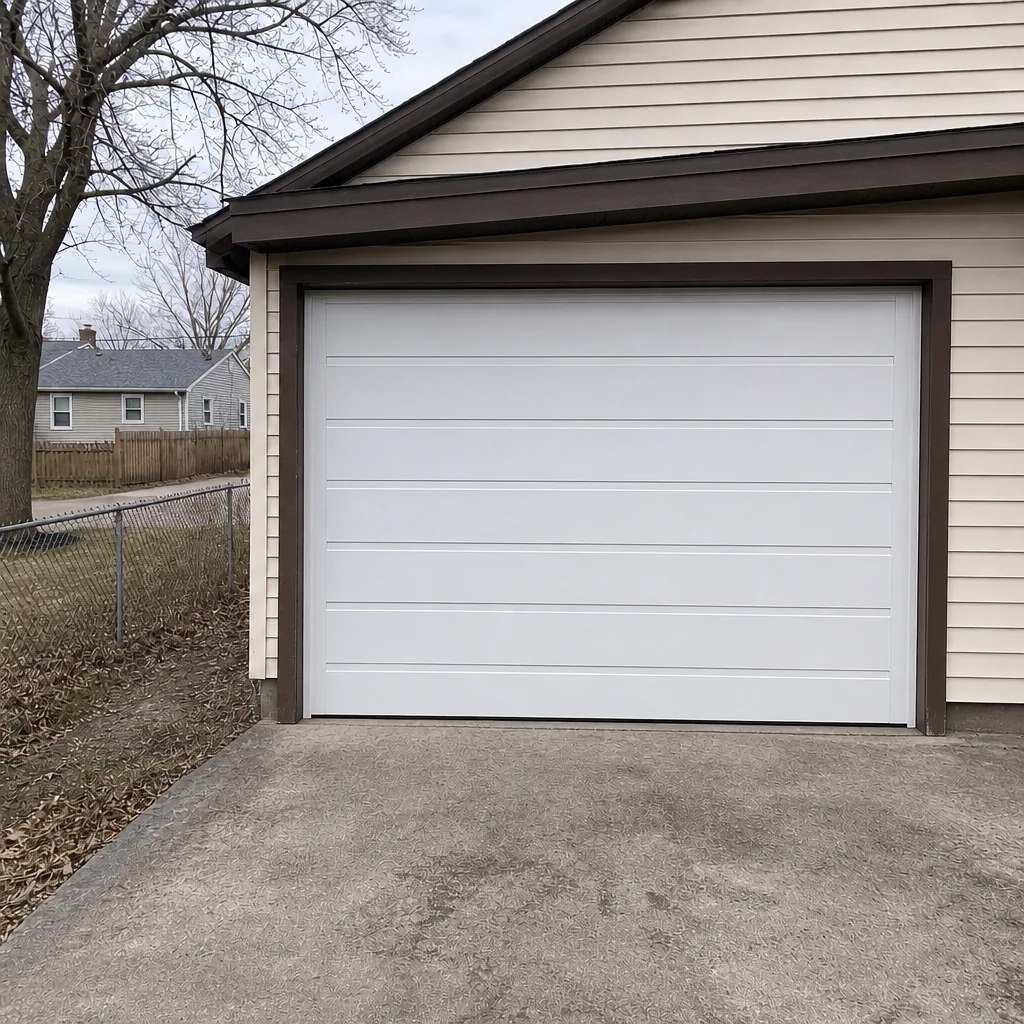 After
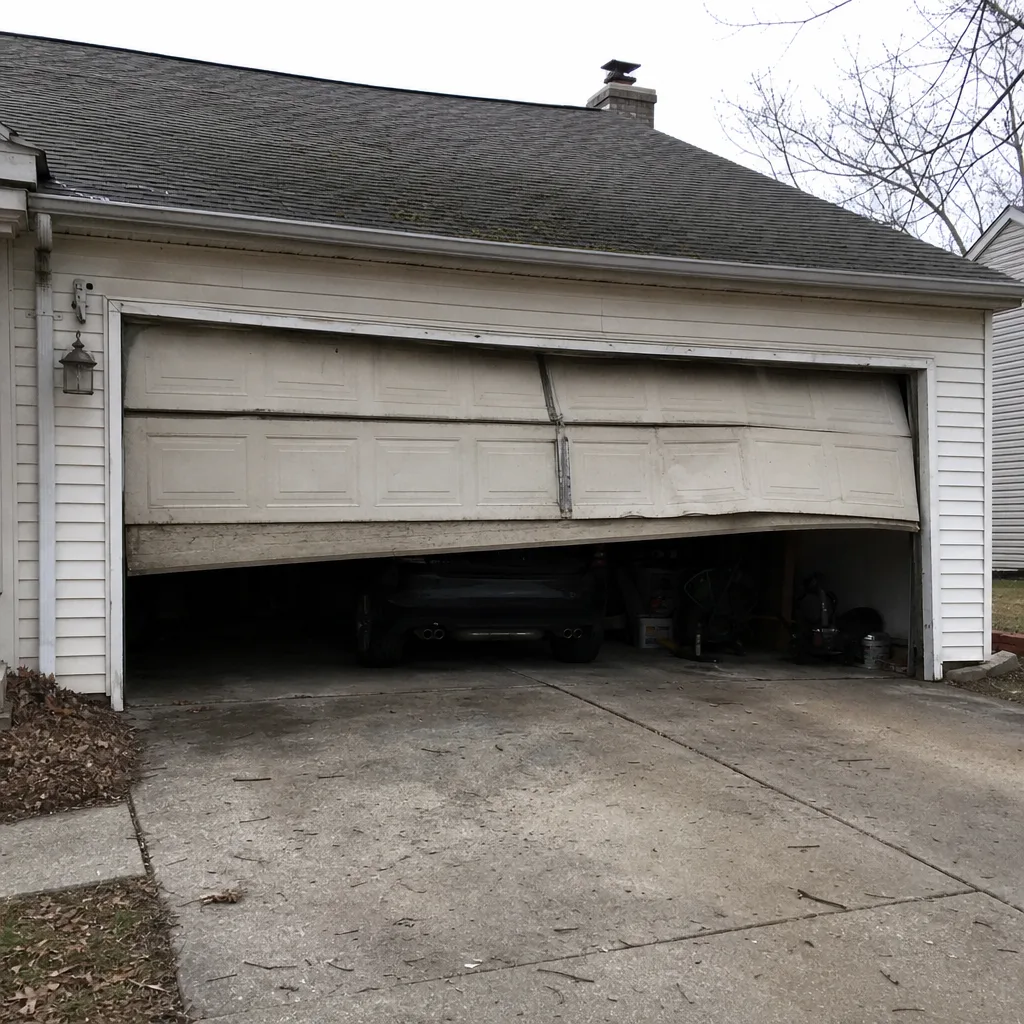 Before
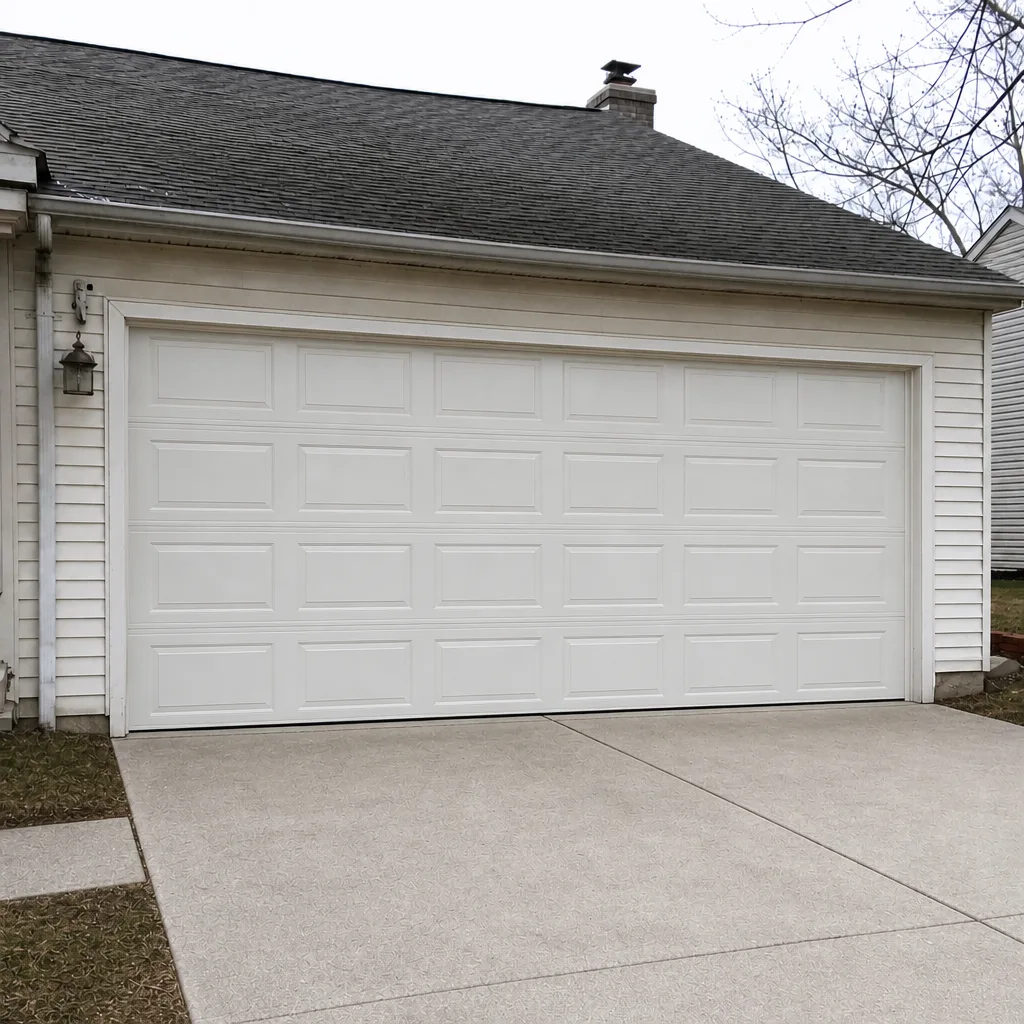 After
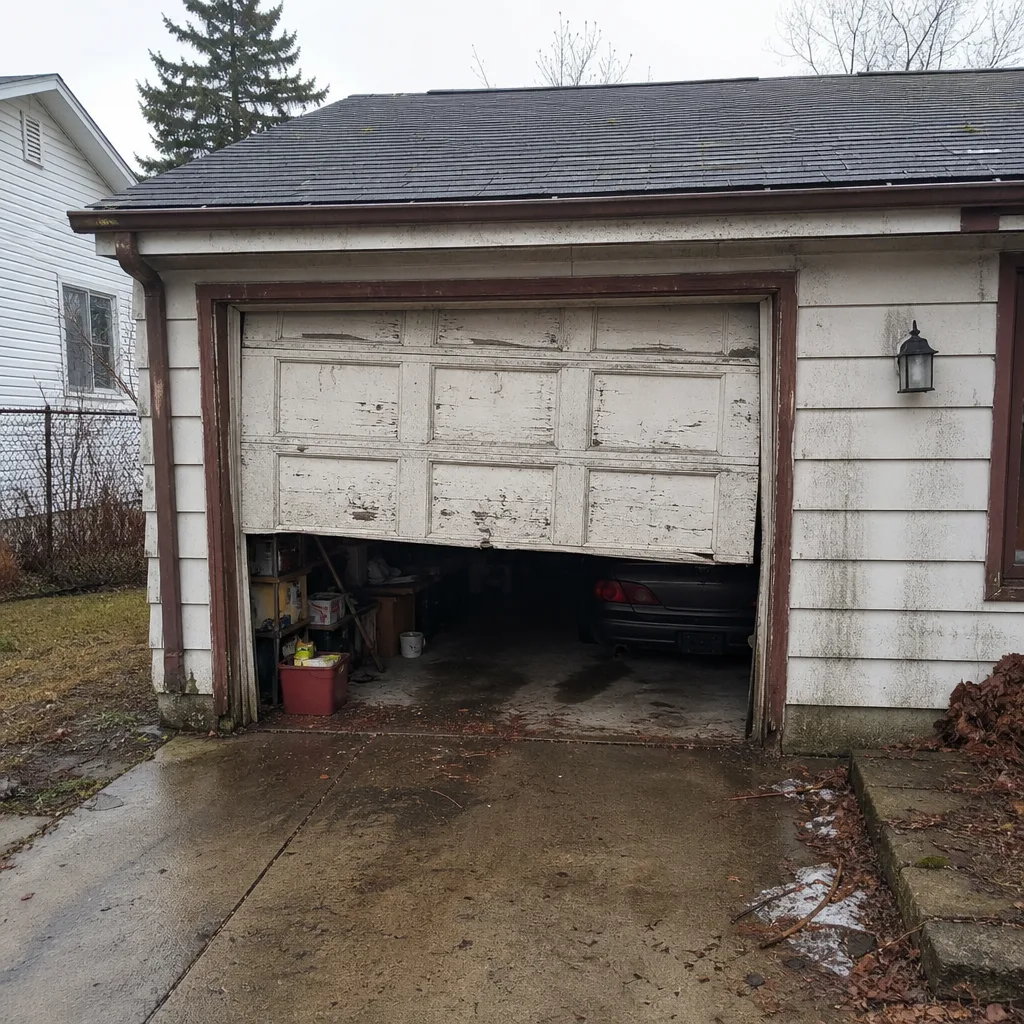 Before
 After
Frequently Asked Questions
Four times a year, timed to the seasons works best: fall prep before the first freeze, a mid-winter balance check, a spring inspection for freeze-thaw damage, and a summer check on humidity and electronics. Homeowners who map tasks to the weather rather than a generic monthly reminder catch problems earlier. Between those, a quick monthly balance test is a sensible habit. Call (844) 320-7553 for a free estimate if something feels off.
Cold thickens lubricant and stiffens steel, so a door that lifted easily in fall needs a bit more effort in deep winter. Some of that is normal and passes with the weather. A door that’s noticeably binding, or one that drops during the balance test, is telling you something mechanical is wrong. That’s worth a technician’s look. Call (844) 320-7553 for a free estimate.
A slightly harder start on a very cold morning can be normal. An opener that consistently strains, short-cycles, or reverses on its own is not normal and points to force or limit settings fighting a stiff door. That’s adjustable, but it’s best adjusted by someone who knows the system. Our technicians work on LiftMaster, Chamberlain, Genie, and other brands, so call (844) 320-7553 for a free estimate.
Yes. Freeze-thaw damage often starts in seams and seals you can’t easily see, and it widens quietly through the winter. That’s why a spring inspection matters even when the door seems fine – it’s a chance to find the small stuff before it fails in summer. If an inspection turns up something, call (844) 320-7553 for a free estimate.
Repair first, and replace only when it makes real sense. A door with failing seals or worn hardware often just needs those parts, and matching replacement parts to your door’s brand (Raynor, Clopay, Amarr, Wayne Dalton) keeps it running without a full replacement. Replacement becomes the better call when the door itself is structurally worn after years of Elgin winters. Either way, a free estimate gives you the facts. Call (844) 320-7553.
Very likely. We service products from LiftMaster, Chamberlain, Genie, Clopay, Amarr, Wayne Dalton, Craftsman, and Raynor. Our technicians have up to 11 years of experience and arrive familiar with common systems, so diagnosis starts faster. Call (844) 320-7553 for a free estimate and tell us what you’ve got.
The Bottom Line
Seasonal garage door care in Elgin is less about a rigid calendar and more about matching tasks to weather. Get your seals dry before the first freeze, give springs and openers a mid-winter balance check, catch freeze-thaw damage in spring before summer hides it, and stay on top of humidity and keypad contacts in summer. That pattern is what keeps repair costs down over the long run. Do the safe checks yourself, call a professional for anything involving tensioned parts, and you’ll get more years out of the door you already have.
If this winter has you worried about your door, call Ridgeway Garage Door Repair at (844) 320-7553 for a free estimate. We answer 24/7, with fast dispatch from 7am to 7pm, Sunday through Friday, and you’ll know the price before any work starts.
Written by the team at Ridgeway Garage Door Repair.