
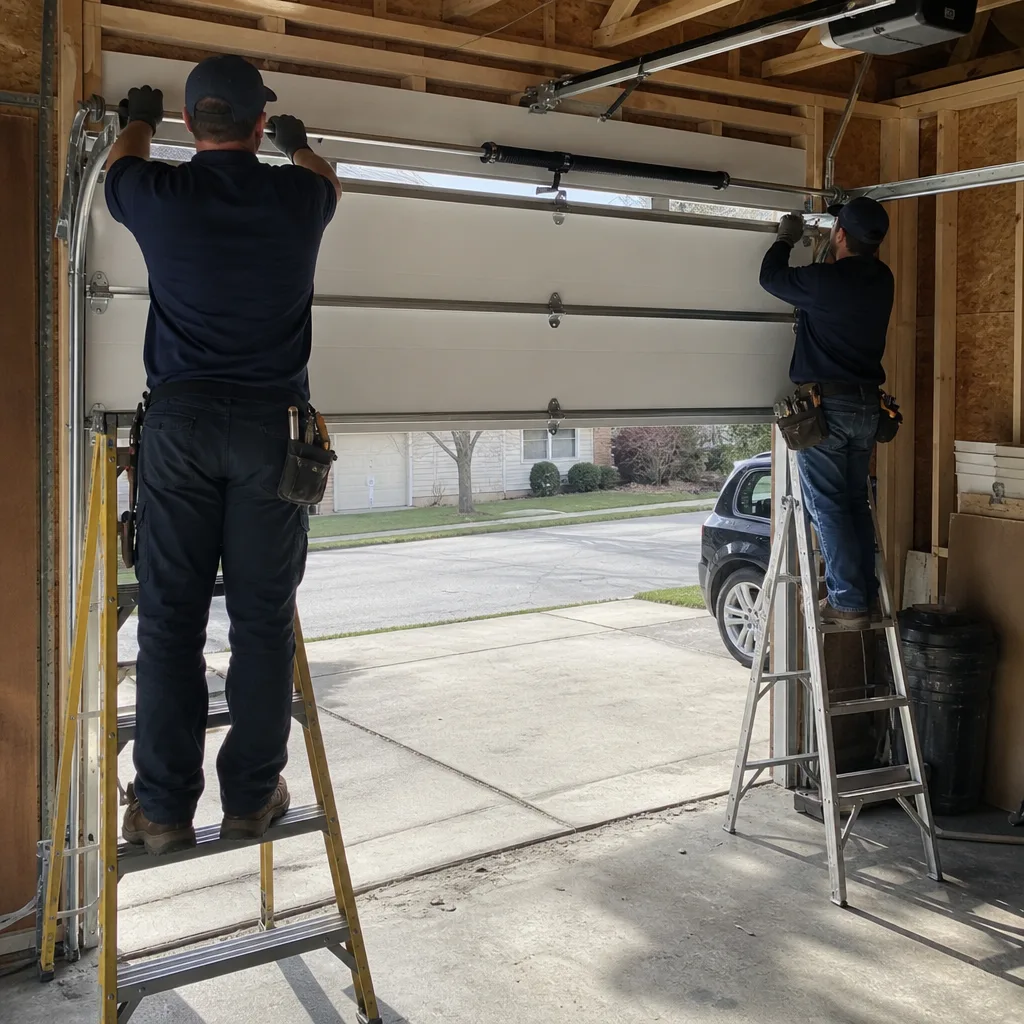
Last updated November 15, 2026
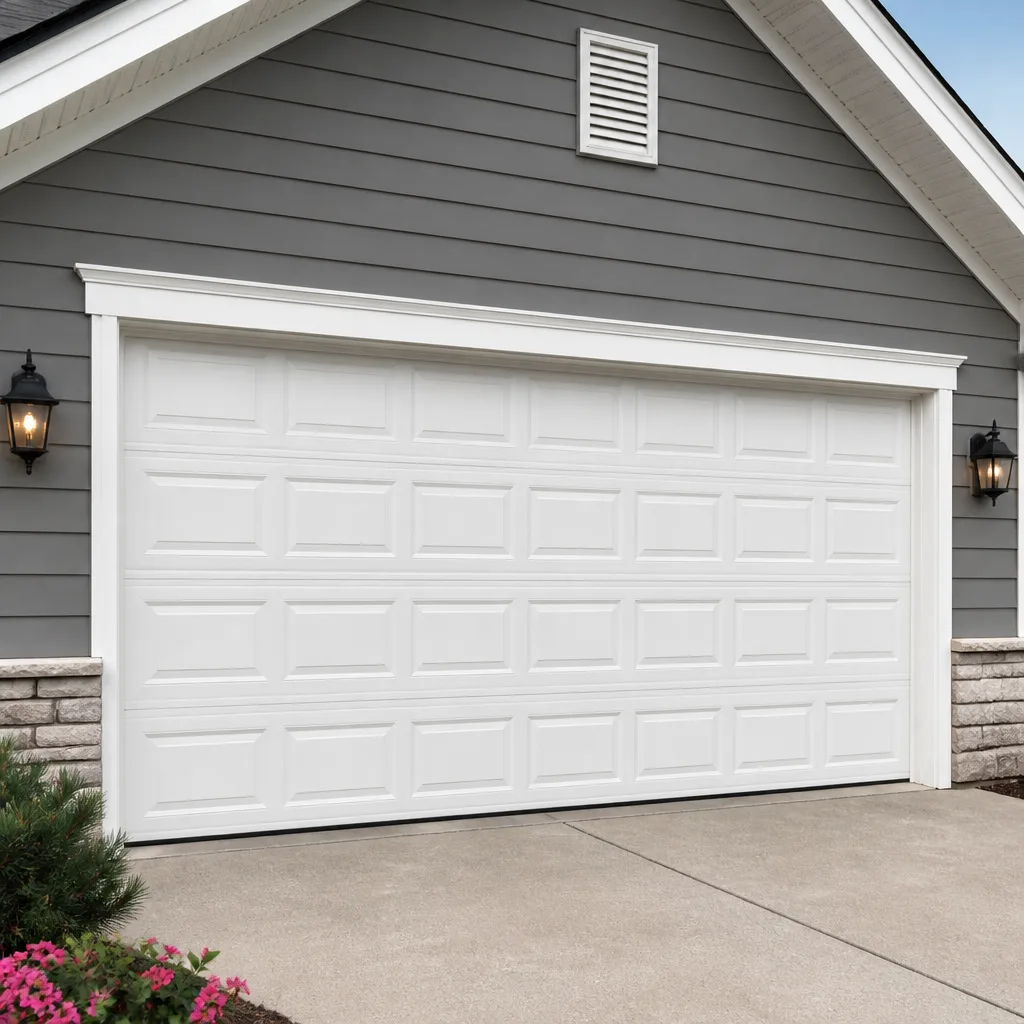 Raised-panel steel
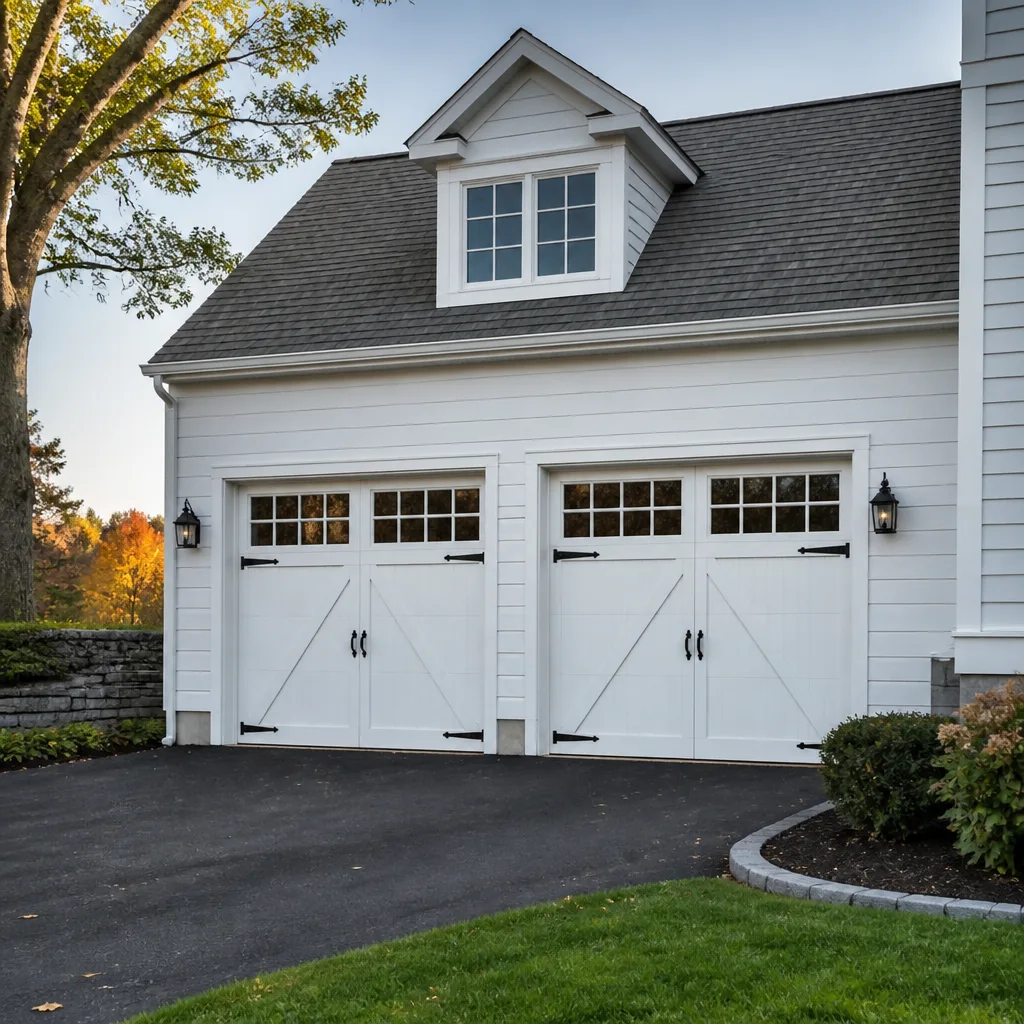 Carriage house
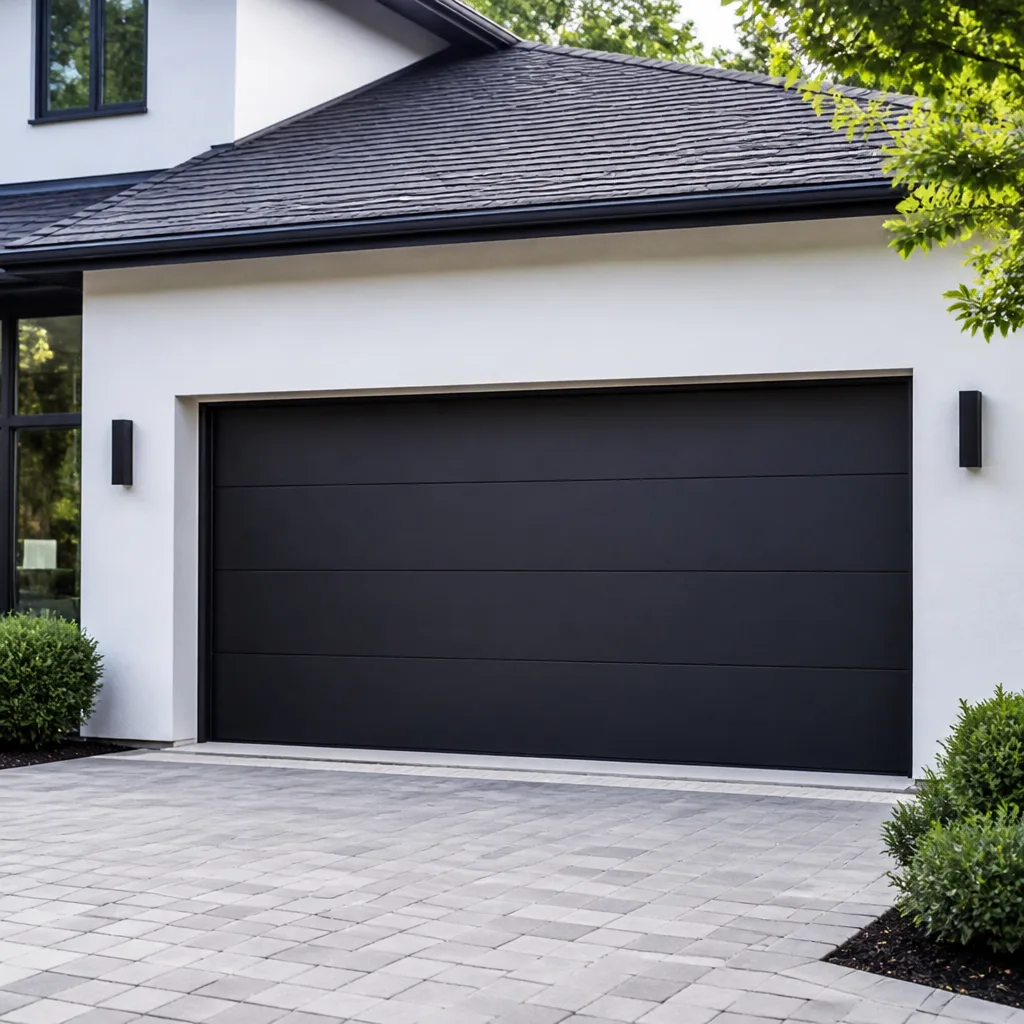 Modern flush
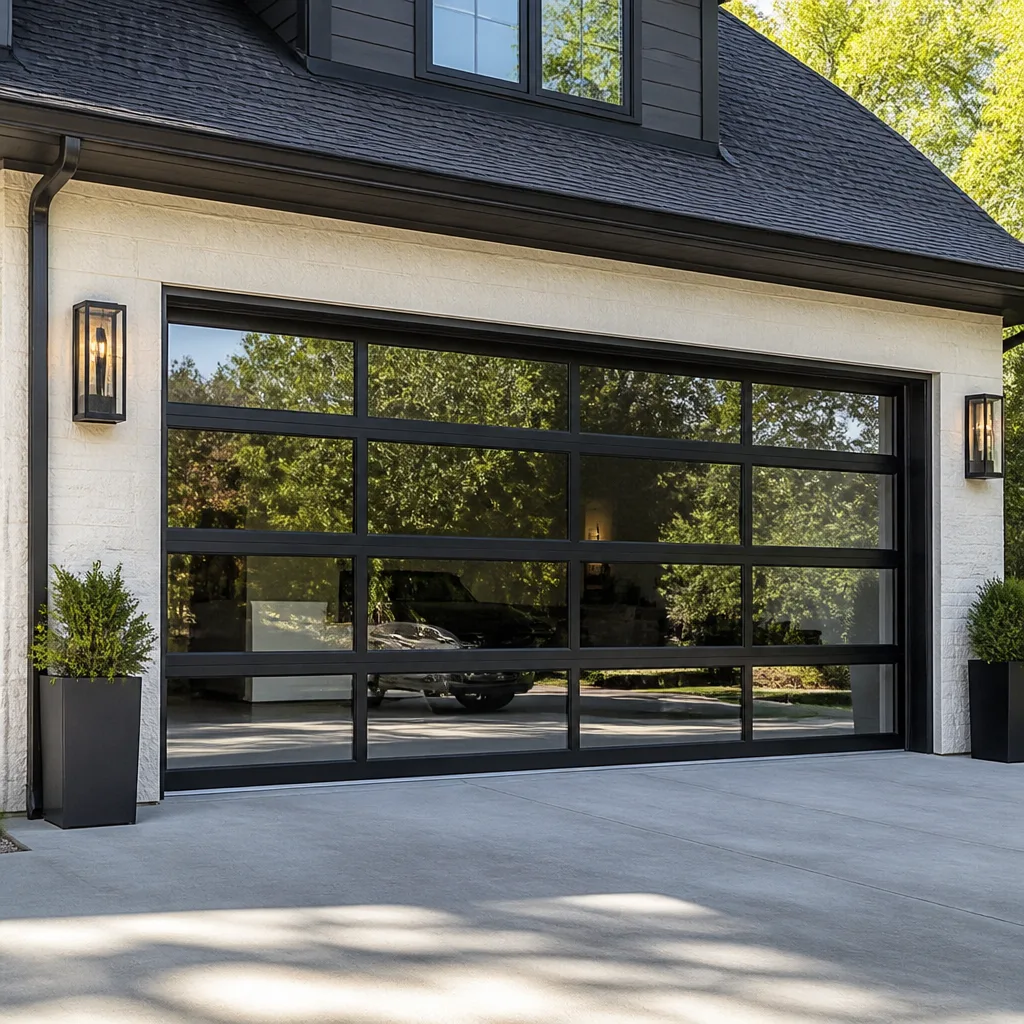 Full-view glass
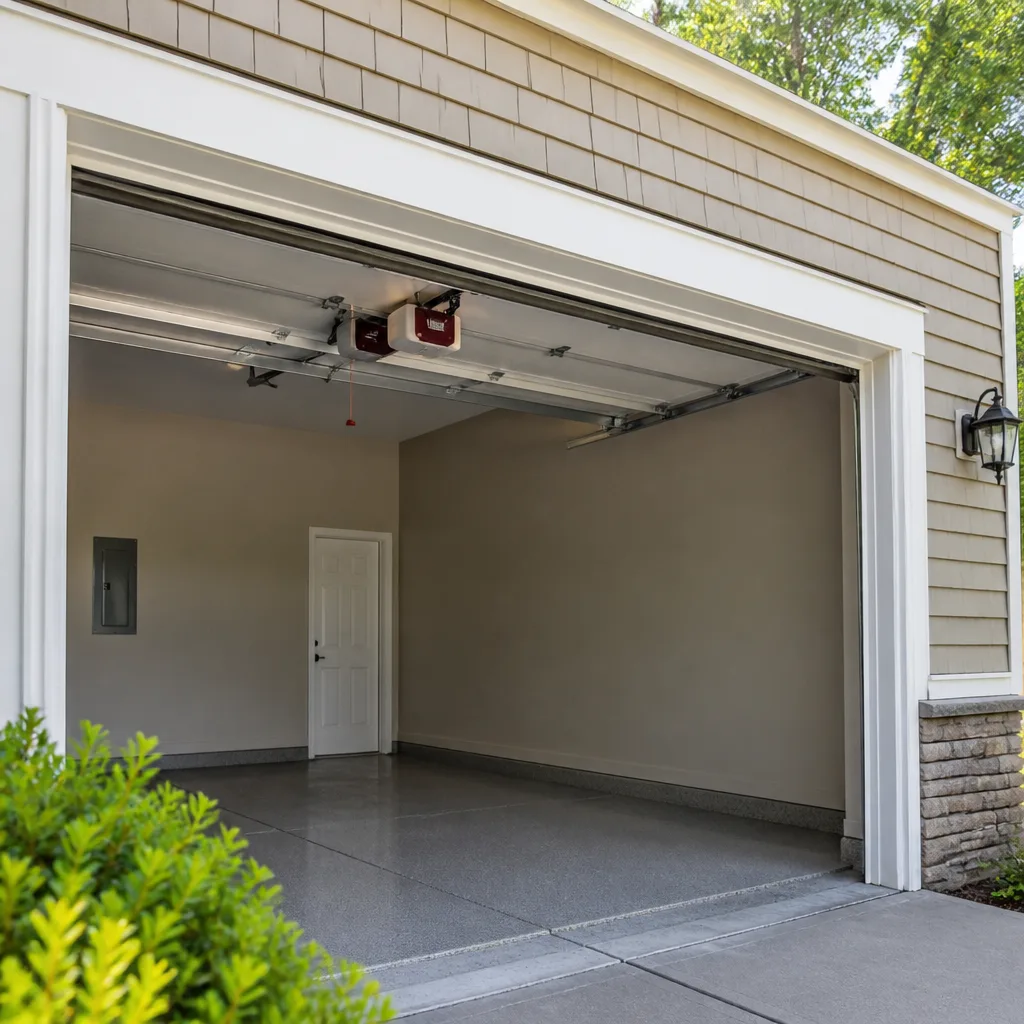 LiftMaster openers
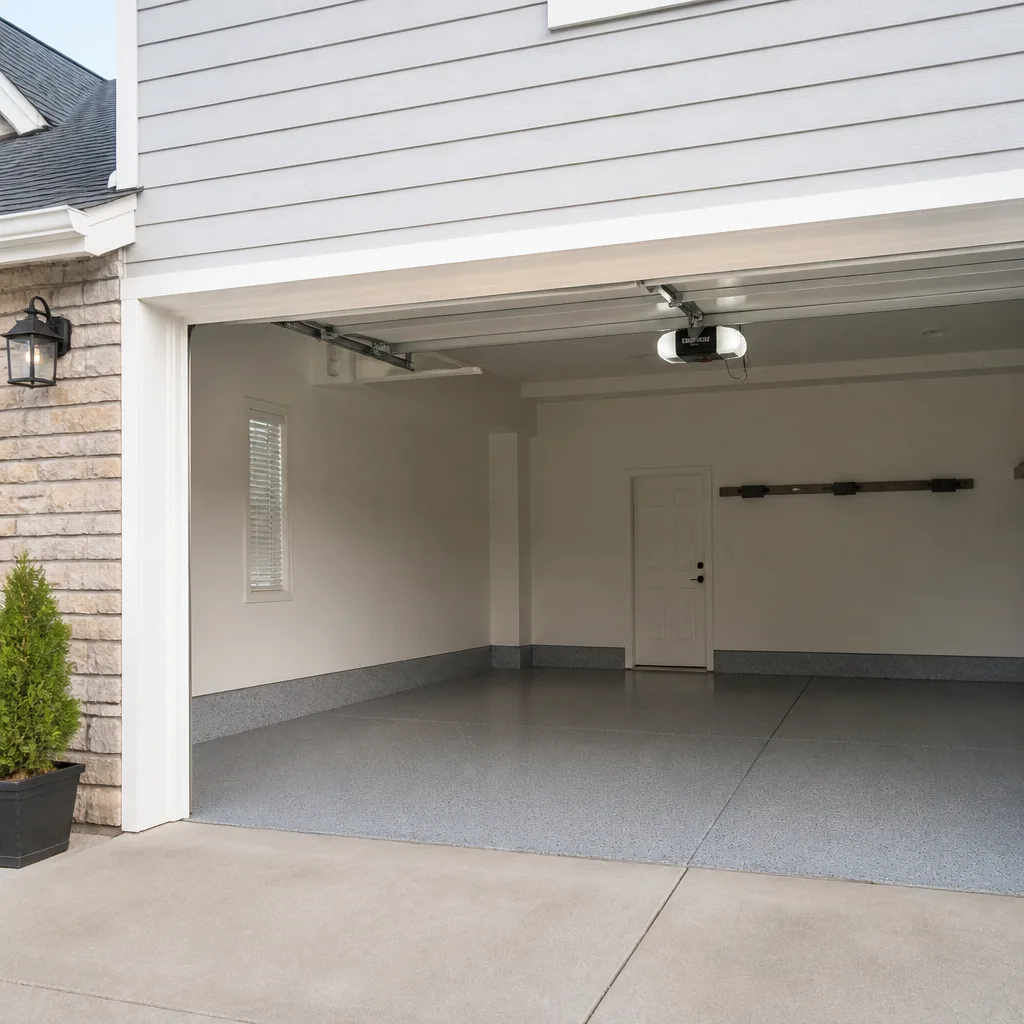 Chamberlain openers
Full 25-point door and opener safety check with every visit - springs, cables, rollers, tracks, and your LiftMaster or Chamberlain opener included
You get a price before we start. It does not change when the pro arrives.
Get your free estimateThe Complete Guide to Garage Doors in Elgin
Most garage door advice online is written for someone shopping for a new door. It assumes you’re comparing panels, picking colors, and weighing curb appeal. But if you live in Elgin and your door just started grinding, reversing for no reason, or hanging crooked off one track, that advice doesn’t help you. It’s written for the wrong moment. The average home here has a door that’s a decade or more into its service life, which means most residents are maintaining and repairing, not buying. This guide is built for that reality. It walks through how to identify what you actually have, how to tell a door problem from an opener problem, which repairs are truly universal and which need brand-specific parts, and why “replace or repair” is almost never the first question worth asking. Read it before you call anyone.
Quick Answer
Garage door problems in Elgin almost always fall into three categories: the door itself (springs, cables, tracks, rollers, panels), the opener (motor, logic board, safety sensors, remote), or the interface between them. Getting the diagnosis right first saves you money, because a door problem misread as an opener problem – or the reverse – leads to parts swapped that were never the issue. Before calling anyone, find your door’s data plate and your opener’s model sticker. That single step tells a technician more than a five-minute phone description ever will.
Styles & brands we work with
- Raised-panel steel
- Carriage house
- Modern flush
- Full-view glass
- LiftMaster openers
- Chamberlain openers
Table of Contents
- What Elgin’s Housing Stock Tells You About Your Door
- Door Problem vs. Opener Problem: Getting the Diagnosis Right
- How to Read Your Door’s Data Plate
- Which Repairs Are Brand-Agnostic and Which Aren’t
- Repair vs. Replace: The Questions That Come First
- How Elgin Weather Affects Your Door
- A Simple Seasonal Check for Elgin Homeowners
- Smart Openers vs. Legacy Systems in Elgin Homes
What Elgin’s Housing Stock Tells You About Your Door
Elgin’s housing spans a genuine range. Older neighborhoods near the river and downtown hold homes from the early 20th century. But the bulk of what we work on sits in the mid-century through 1990s bands – subdivisions that grew during Elgin’s expansion, when sectional steel doors and chain-drive openers became standard. Newer subdivisions on the edges carry taller doors, insulated panels, and belt-drive openers with smart-home connectivity.
That mix matters because door type and opener brand track with construction era:
- 1970s and 1980s builds often carry uninsulated single-layer steel doors and chain-drive openers. These are workhorses but noisy, and the openers are usually at or past their service life.
- Late 1980s into the 1990s saw the rise of two-layer and insulated doors with better weather sealing, and opener brands like Craftsman and Genie became very common in garages across Elgin.
- Newer subdivisions tend toward insulated carriage-style and modern-flush doors, frequently Amarr or Clopay, paired with LiftMaster or Chamberlain openers running the myQ platform.
Why does this matter? Because knowing your construction era tells you what’s likely in your garage before you even look. A 1988 build and a 2019 build need different parts, different opener expertise, and a different conversation. When you call a technician, mentioning the age of the home instantly narrows the diagnosis. It’s one of the fastest things you can do.
If you’re already certain something is broken and just want it looked at, our garage door repair service covers the full range of what we see in Elgin homes.
Door Problem vs. Opener Problem: Getting the Diagnosis Right
The single most expensive mistake we see is a homeowner (or a generalist) treating an opener problem as a door problem, or the reverse. The opener pushes and pulls. The door carries its own weight through springs and cables. When one fails, the other often gets blamed.
Signs the problem is the door
- The door is visibly crooked, sagging on one side, or off its track
- You hear a loud snap from above and the door is now very heavy to lift
- The bottom seal is torn, frozen to the floor, or dragging
- Rollers are worn flat, or the track is bent or separated from the frame
- The door is heavy to open by hand with the opener disengaged
Signs the problem is the opener
- The door moves smoothly by hand with the opener disengaged, but won’t move when engaged
- The opener runs but the door doesn’t move (broken drive gear or stripped sprocket)
- Lights blink in a pattern, or the opener beeps and reverses
- Safety sensors at the bottom of the track are misaligned, dirty, or one is dead
- The remote or wall button stops working but the manual release works fine
Here’s the money-saving part: a safety-sensor misalignment will make an opener reverse the door repeatedly, which looks exactly like a binding door. Homeowners often assume the door is broken and call for a door repair. In reality, it’s a two-minute sensor adjustment. On the flip side, a broken spring makes the door so heavy the opener strains, and people assume the opener is weak. It isn’t – the springs are. That’s why the physical test above (open the door by hand with the opener disengaged) is the most useful thing you can do before calling.
Aspring, cable, or track problem is genuinely dangerous to inspect closely. High-tension springs and the cables under them hold enormous stored force and can cause serious injury if handled wrong. Don’t try to adjust, tighten, or replace them yourself. Check the door by hand from the outside, note what you see, and leave the rest to a trained technician.
For opener-specific issues, our garage door opener repair page covers the diagnosable symptoms in detail.
How to Read Your Door’s Data Plate
Nearly every sectional garage door carries a small manufacturer’s label or data plate, usually on the inside of one of the middle panels or near a hinge. Reading it before you call gives a technician the exact model and lets them load the right parts for the first visit. Here’s how to find and interpret it:
- Locate the label. Stand inside the garage with the door closed. Look along the inside face of the panels – middle height is typical – and near the bottom bracket. It’s often a small sticker or a metal plate.
- Note the brand. The label will name the door manufacturer – Amarr, Clopay, Wayne Dalton, Raynor, and others all appear on Elgin doors. This tells the technician whose parts catalog to check.
- Record the model or series number. This is the key identifier. It tells you the panel thickness, insulation rating, and spring configuration, all of which determine replacement part matching.
- Note the door width and height. Standard single doors are typically 8 or 9 feet wide; double doors 16 feet. Height is usually 7 or 8 feet. If the label is unreadable, measure and write it down.
- Find the opener’s model sticker. On the opener motor housing (usually on the ceiling unit or the rail), there’s a model and serial sticker. Photograph it with your phone.
If you can read the plate and the opener sticker, you’ve done more legwork than most callers. That single step lets a technician diagnose faster and quote more accurately. Photograph both labels – a clear photo of the data plate and the opener sticker is worth a lot.
Which Repairs Are Brand-Agnostic and Which Aren’t
Not all garage door repairs are created equal when it comes to brand. Some things are universal – any technician with standard parts can handle them. Others genuinely require knowing the specific brand and model, because the parts aren’t interchangeable.
Brand-agnostic repairs (universal)
- Roller replacement (standard 2-inch or 3-inch rollers fit nearly all sectionals)
- Track adjustment and realignment
- Bottom seal and weatherstripping replacement
- Hinge and bracket tightening
- Safety sensor cleaning and realignment
- Lubrication and general tune-up
Brand-specific repairs (need the right parts)
- Torsion and extension springs – matched to door weight and brand geometry, not universal
- Cables and drums – sized to the specific door and brand
- Panels – a damaged section must match the door’s series; a Wayne Dalton panel won’t fit a Raynor door, and vice versa
- Opener logic boards, drive gears, travel modules – specific to opener brand and generation
- Smart opener accessories – myQ-compatible components work with LiftMaster and Chamberlain; Craftsman and Genie legacy openers use different accessories
This is where knowing your brand pays off directly. A technician familiar with Amarr and Wayne Dalton can match a replacement panel on the first try. A technician guessing at it may order the wrong one. We work on what you already have, which means no pushing you toward a preferred line. We’ve serviced Raynor, Amarr, Wayne Dalton, Craftsman, and the rest of the eight major brands long enough to know where the parts come from.
Repair vs. Replace: The Questions That Come First
“Should I repair or replace?” is the question homeowners almost always lead with. It’s the wrong first question. Repair versus replacement is a conclusion, not a starting point. The questions that should come first are simpler and more useful.
- What’s actually broken? A single failed spring, a bent track, or a dead opener sensor are all repair jobs regardless of door age. You can’t decide replace vs. repair until the diagnosis is solid.
- How old is the door, and how many components have failed recently? One failure is a repair. A pattern of repeated failures across springs, cables, and panels suggests the whole system is wearing out together – which is a different conversation.
- Are parts available for this model? Older doors from discontinued lines can be hard to source panels for. If the door is otherwise sound but the panel isn’t available, that changes the math.
- What’s the door’s condition? Is it warped, rusted through, or structurally compromised? A cosmetic dent is a repair. A rusted-through panel that’s losing structural integrity isn’t.
- Will the opener support a heavier or different door? If you do replace, the opener may need to change too, which affects the total picture.
Our repair-first approach means we list repair and opener repair before installation for a reason: replacement is a last resort, not a default. When you call, expect to be asked about the door’s age, its current condition, and what’s actually happening – not pitched on a new door before anyone looks at the problem.
Have a specific problem and want it looked at? Our Ridgeway Garage Door Repair team provides free estimates and can tell you what a repair involves before any work starts.
How Elgin Weather Affects Your Door
Elgin’s climate is genuinely hard on garage doors. The freeze-thaw cycle is the main culprit. In winter, moisture works into seals, hinges, and bottom brackets, then freezes and expands. Repeated freeze-thaw can crack rubber seals, loosen hinges, and push a door slightly out of alignment over a few seasons.
Here’s what actually happens across the year:
- Winter cold makes the metal contract and the bottom seal stiff. A door that fits snugly in July can develop a small gap at the floor in January, letting cold air and moisture in.
- Spring thaw is when alignment problems often surface – the door was subtly out of true all winter, but the freeze held it. Warmer, wetter weather reveals it.
- Summer heat and humidity cause wood frames and some seals to swell. A track that was tight in winter may bind in a hot, humid July.
- Fall is prime time for leaves and debris in the track and around the bottom seal, which cause the door to bind and the opener to strain.
None of this means the door is failing – it means the door is responding to climate. A seasonal check catches the small issues before they become repairs. More on that next.
A Simple Seasonal Check for Elgin Homeowners
A ten-minute check four times a year prevents most of the repairs we see. It’s not maintenance work you need a technician for – it’s observation, not adjustment. Here’s the routine:
- Open the door by hand with the opener disengaged. Pull the release cord and lift. A properly balanced door opens easily and stays up three to four feet off the floor. If it’s heavy or won’t stay up, that’s a spring problem – stop and call.
- Look along both tracks. Check the full length for debris, leaves, or misalignment. Bolts that have worked loose are common. Don’t loosen or tighten spring hardware; stick to the tracks and rollers.
- Inspect rollers and hinges. Worn rollers look flat or chipped. Worn hinges wobble. Both are universal repairs, but leave the replacement of spring-adjacent hardware to a technician.
- Check the bottom seal. Run your hand along the seal – it should meet the floor along its full length. Gaps let in water and pests. Torn or stiff seals are a fast, universal fix.
- Test the safety sensors. Wave an object in front of them while the door closes – the door should reverse immediately. If it doesn’t, the sensors need cleaning or adjustment.
Add a quick inspection after any big storm or temperature swing. That’s the whole routine. If you find a problem you can’t observe without getting close to springs or cables, don’t. Call a professional – that’s a genuinely dangerous area.
Smart Openers vs. Legacy Systems in Elgin Homes
Elgin garages contain a real spread of opener generations. The newer end has LiftMaster and Chamberlain units running the myQ smart-home platform, which lets you monitor and control the door from a phone and integrates with common smart-home systems. The older end has Craftsman and Genie units – reliable workhorses, but without the connectivity features, and often at or past their service life.
The important thing to understand: this is not a “smart vs. dumb” quality judgment. It’s about which platform the technician needs to be fluent in. A Craftsman opener from the 1990s uses different logic, different remotes, and different accessories than a current LiftMaster. A technician who only knows one ecosystem will struggle with the other. We’re trained on both – the myQ-connected systems and the traditional and legacy openers – which matters because Elgin homes hold a genuine mix.
If your opener is a legacy unit that’s still running reliably, there’s usually no reason to replace it just to get connectivity. If you want to add smart features, an opener technician can tell you whether your unit supports a bridge or whether an upgrade makes sense. And if the opener has failed entirely, that’s a repair conversation – not automatically a replacement.
Our Elgin service coverage includes all of these platforms, and technicians arrive familiar with the likely brand for your home’s era.
Common Mistakes to Avoid
- Assuming the cheapest quote is the honest quote. The lowest number often becomes a higher one once the technician arrives and finds the parts needed. Ask what’s included in the estimate before you compare.
- Diagnosing from the phone without checking the door by hand. Five minutes with the opener disengaged tells you more than a description. Skip it and you may describe a symptom that points at the wrong component.
- Calling a general handyman for a spring or opener problem. Garage doors are a specialized trade. A handyman splitting attention across many jobs may misdiagnose or lack the brand-specific parts. Call a specialist.
- Lubricating everything. Rollers and hinges benefit from the right lubricant in the right places. Tracks should stay clean and dry. Greasing the wrong part creates a mess that attracts debris.
- Skipping the data plate and opener sticker. A clear photo of both labels saves a return visit and helps ensure the right parts are ordered the first time.
- Pushing and pulling a door that’s off its track. A door hanging off one side is a genuine safety hazard. Stop using it and call a professional.
- Assuming an unresponsive door means the opener needs replacing. A misaligned safety sensor or a broken drive gear looks like a dead opener. Diagnose before spending.
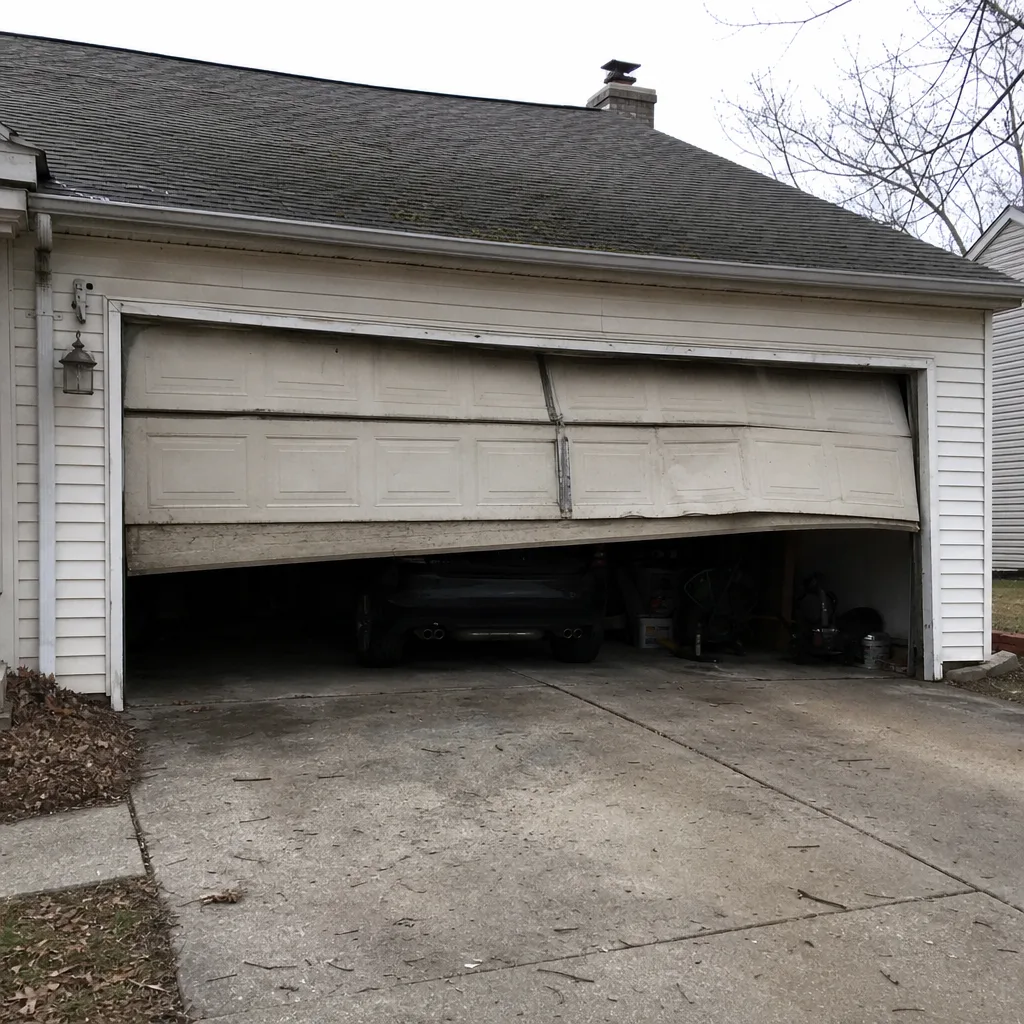
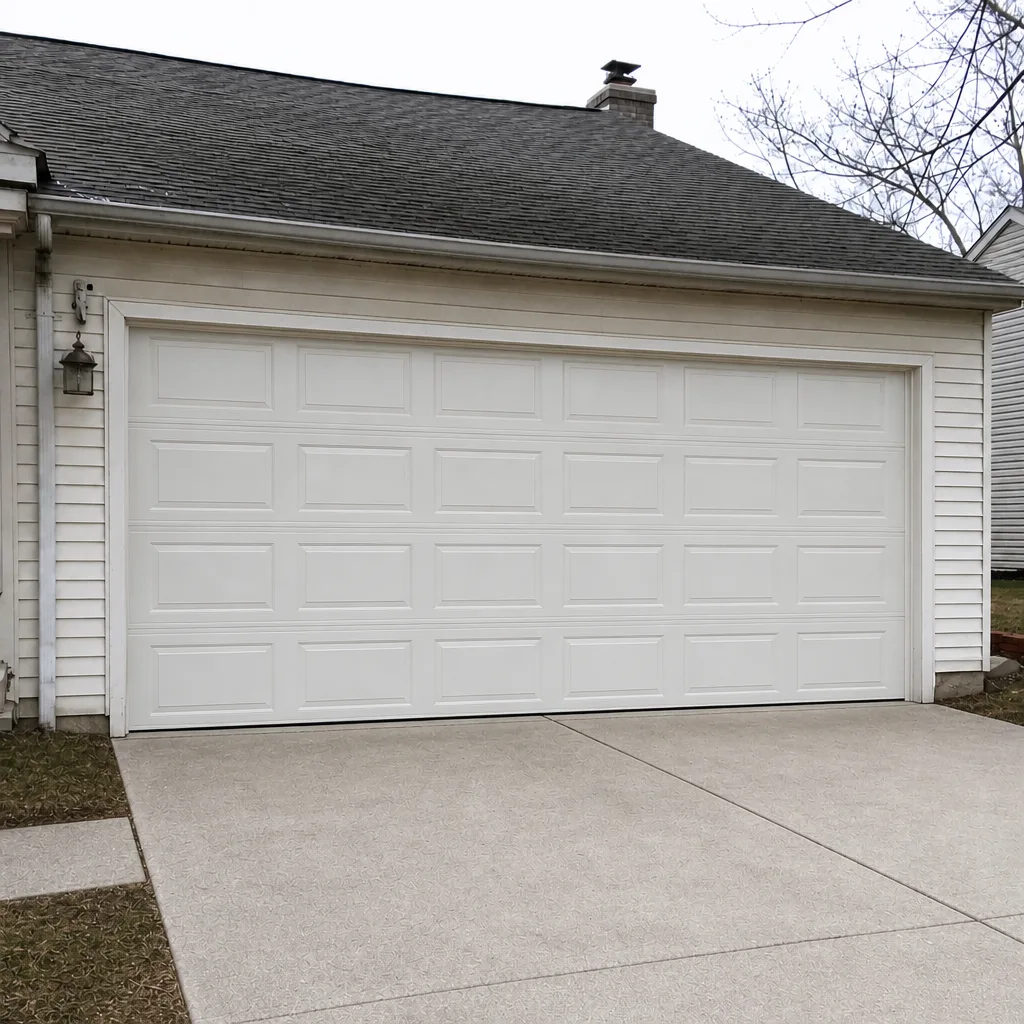
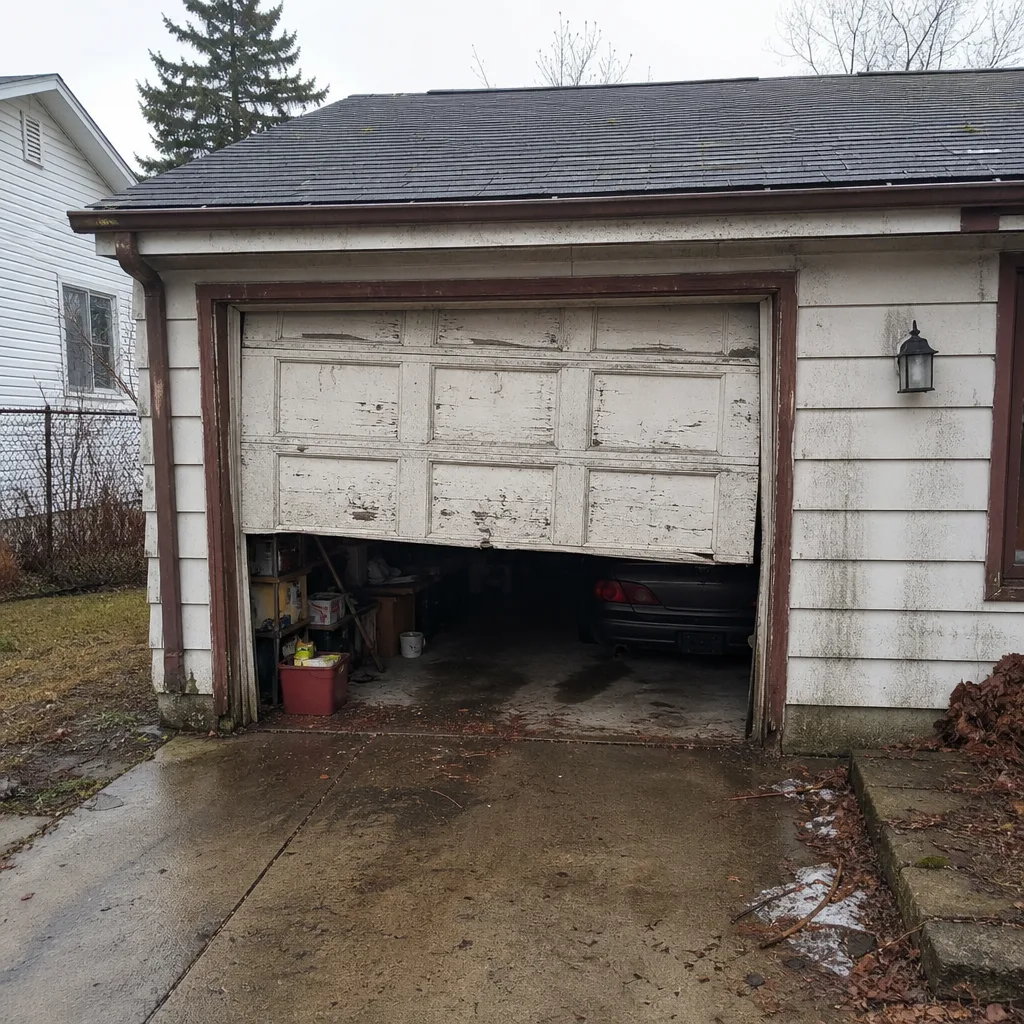
See the difference
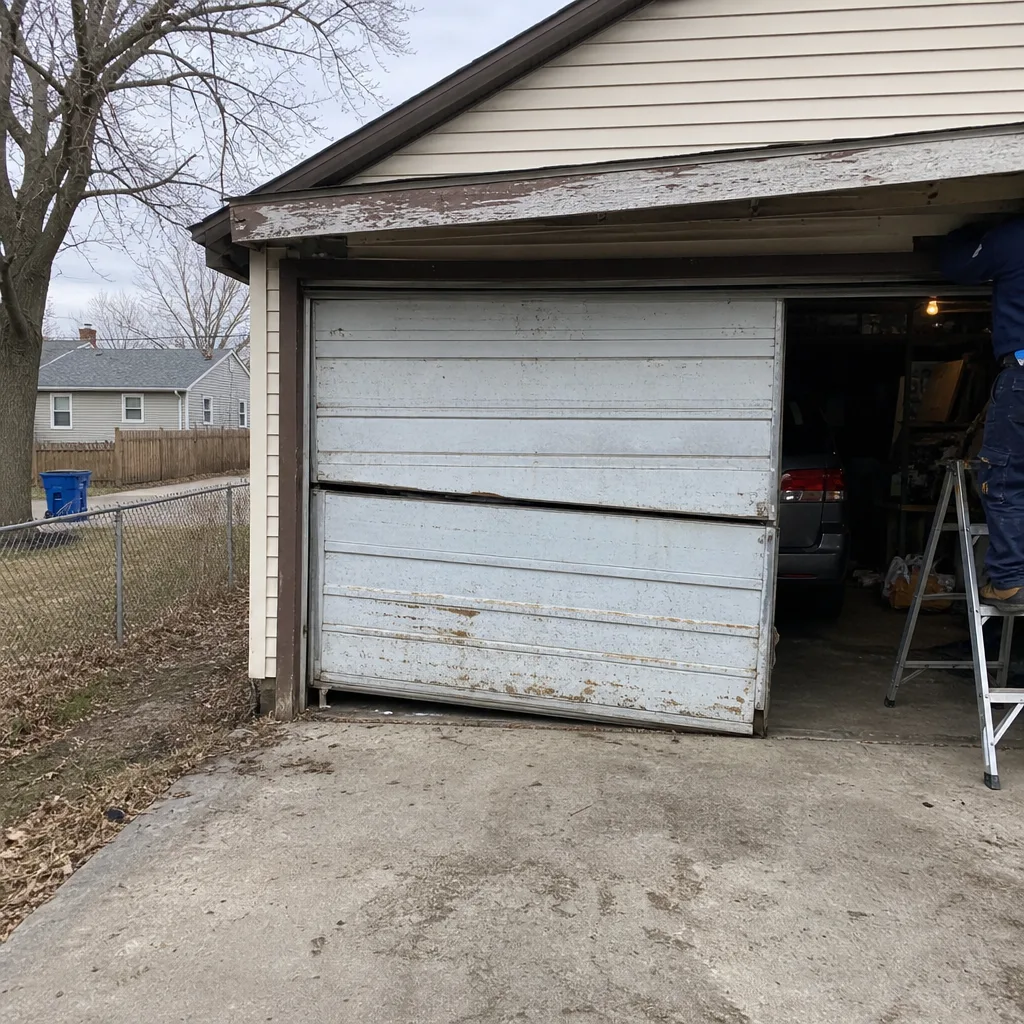 Before
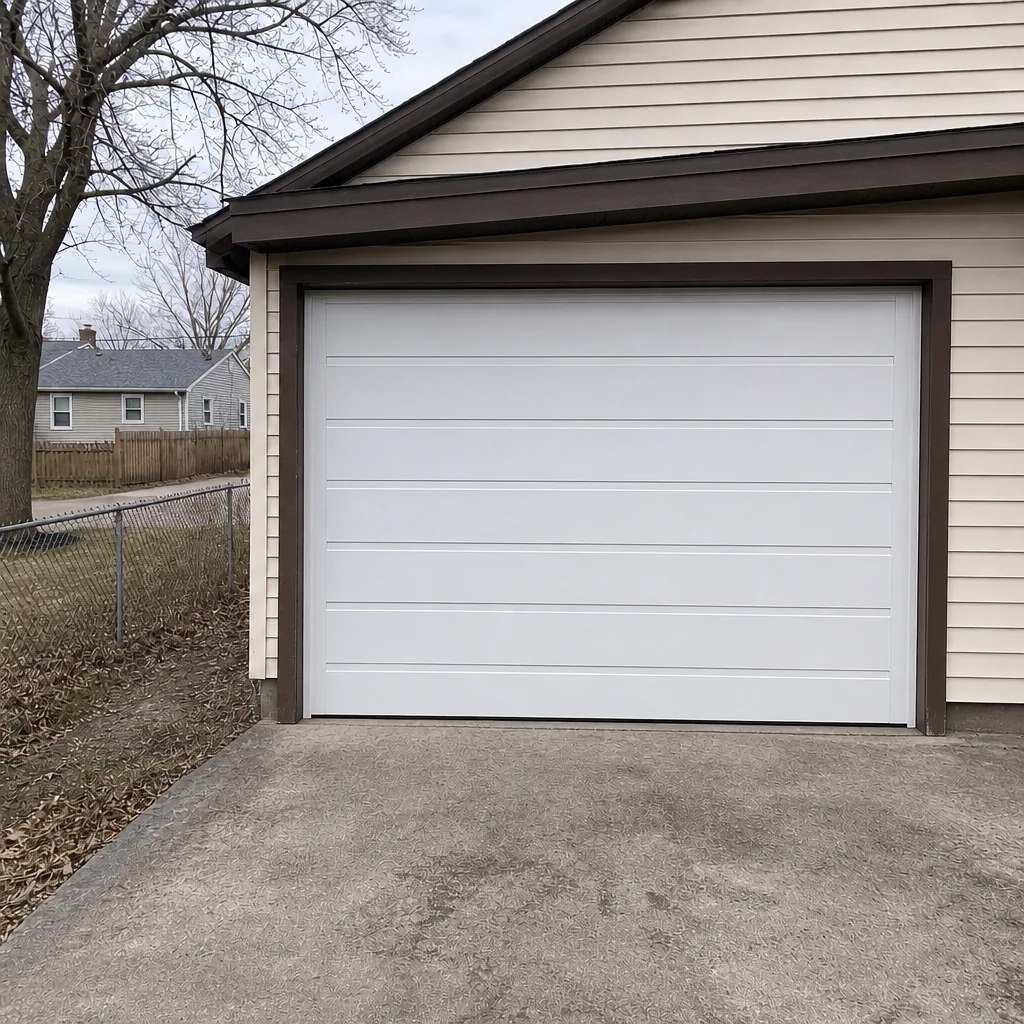 After
 Before
 After
 Before
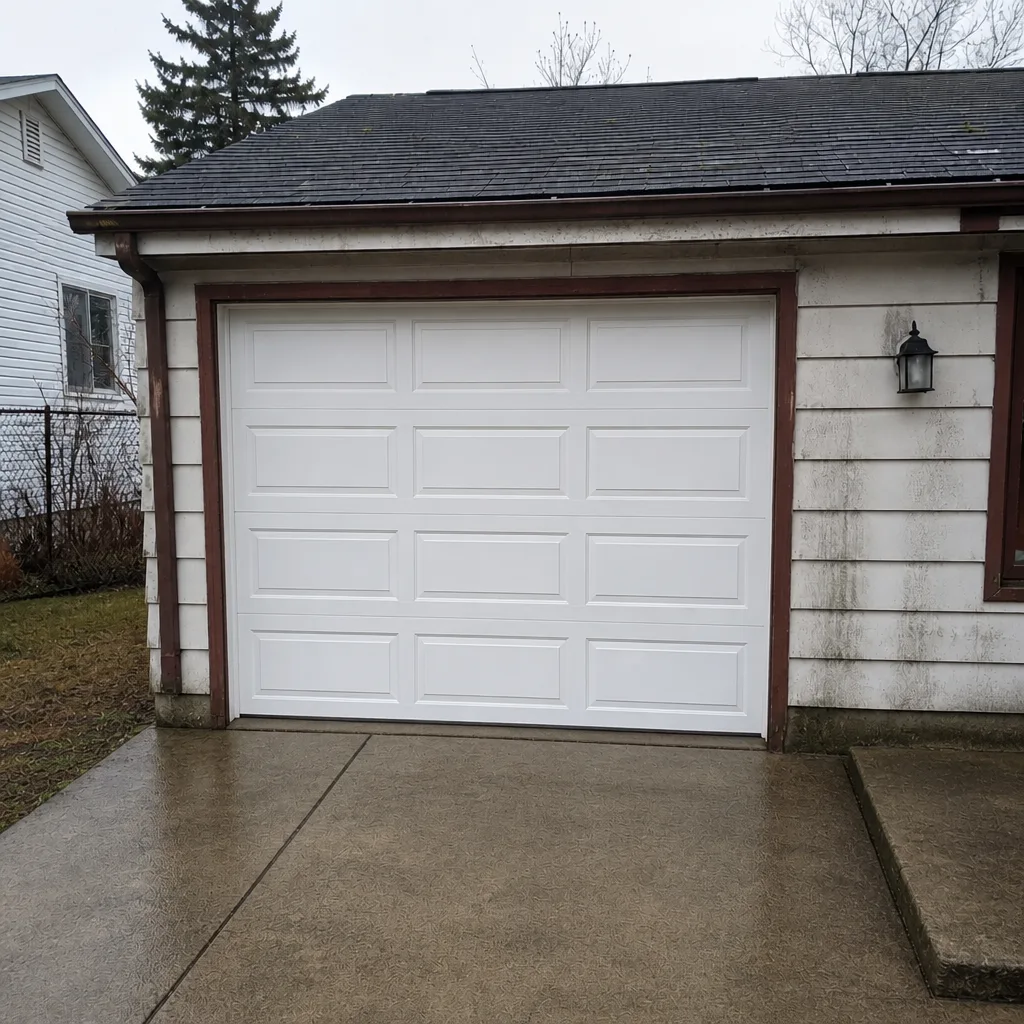 After
When to Call a Professional
Some things are observation. Some things need trained hands. Call a professional immediately if the door is crooked, hanging off its track, will not stay up when opened by hand, or if you’ve heard a loud snap and the door is now very heavy – these point to spring or cable failure and are genuinely dangerous to touch. Call if the opener reverses without an obstruction, blinks error patterns, or runs without moving the door. Call if a bottom seal has torn or the door won’t close flush. And call if your seasonal check turns up anything near the springs or cables that you can’t inspect safely.
Ridgeway Garage Door Repair offers free estimates in Elgin – call (844) 320-7553. We answer 24/7. Fast dispatch from 7am to 7pm, Sunday through Friday. The price is quoted and agreed before any work begins, and the written estimate sets the final price.
Frequently Asked Questions
A reversing door is almost always a safety-sensor problem, not a door or opener failure. The two sensors at the bottom of the tracks need to be aligned, clean, and unobstructed; if one is knocked out of line or dirty, the opener reverses the door repeatedly. Check for debris or a misaligned sensor first. If they’re clean and aligned and the door still reverses, call (844) 320-7553 – estimates are free.
We offer same-day service on repair and opener repair calls, with fast dispatch from 7am to 7pm, Sunday through Friday. Call (844) 320-7553 to check availability; we answer 24/7. If you call outside dispatch hours, we book you into the next opening.
Springs are usually replaced as a matched pair, because both are typically the same age and one failing means the other is close behind. Replacing one and leaving the other risks a second breakdown soon after. A technician can confirm whether your door uses a pair or a single spring. Call (844) 320-7553 for an exact quote – the estimate is free.
Find the model and serial sticker on the opener’s motor housing, usually on the ceiling unit or the rail. The brand name – LiftMaster, Chamberlain, Genie, Craftsman – and the model number will be printed there. Photograph it before you call; that’s the fastest way to get the right parts on the first visit. If it’s unreadable, call (844) 320-7553 and we’ll ask a few questions to narrow it down.
The written estimate sets the final price – the price is quoted and agreed before any work begins. A visual inspection can reveal issues a phone description can’t, so it’s worth getting the estimate done in person. Call (844) 320-7553 to schedule a free estimate.
Our technicians are experienced, and the independent local professionals we connect you with are licensed and insured. We specialize exclusively in garage doors – not general handyman work – and our technicians have up to 11 years of experience. Call (844) 320-7553 with any questions.
The Bottom Line
The most useful thing you can know about your garage door in Elgin is what you already have. Find the data plate and the opener sticker, note the brand and model, and understand which problems are door problems and which are opener problems. That knowledge turns a stressful repair into a straightforward one. Most Elgin homes are maintaining doors that are a decade or more into service – so this is a repair decision, not a replacement one. Repair first, replace only when it makes sense. And when you need it looked at, know the price is quoted and agreed before any work starts.
Ridgeway Garage Door Repair works on what you already have – eight brands, one number to call. We cover repair, opener repair, and installation for LiftMaster, Chamberlain, Genie, Clopay, Amarr, Wayne Dalton, Craftsman, and Raynor systems. For a free estimate in Elgin, call (844) 320-7553. We answer 24/7. Fast dispatch from 7am to 7pm, Sunday through Friday.
Written by the team at Ridgeway Garage Door Repair.