
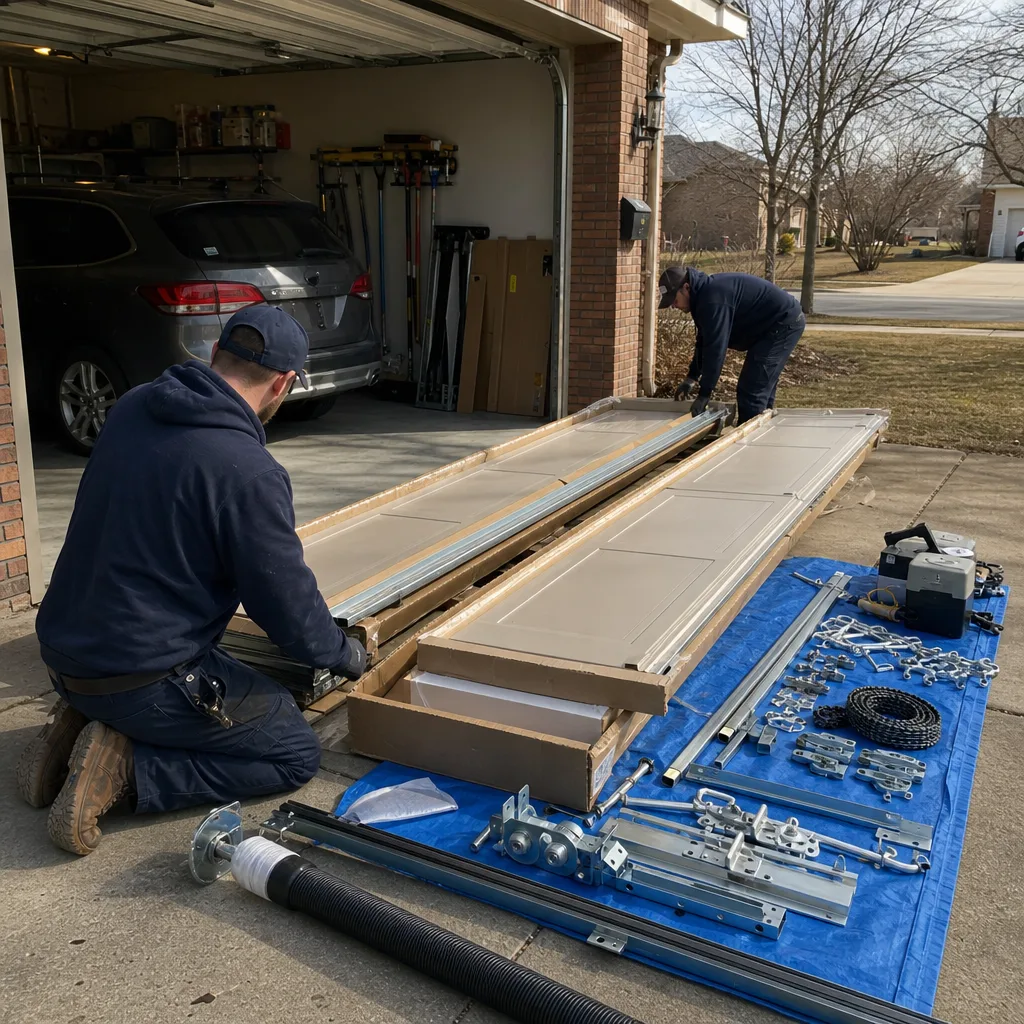
Last updated November 15, 2026
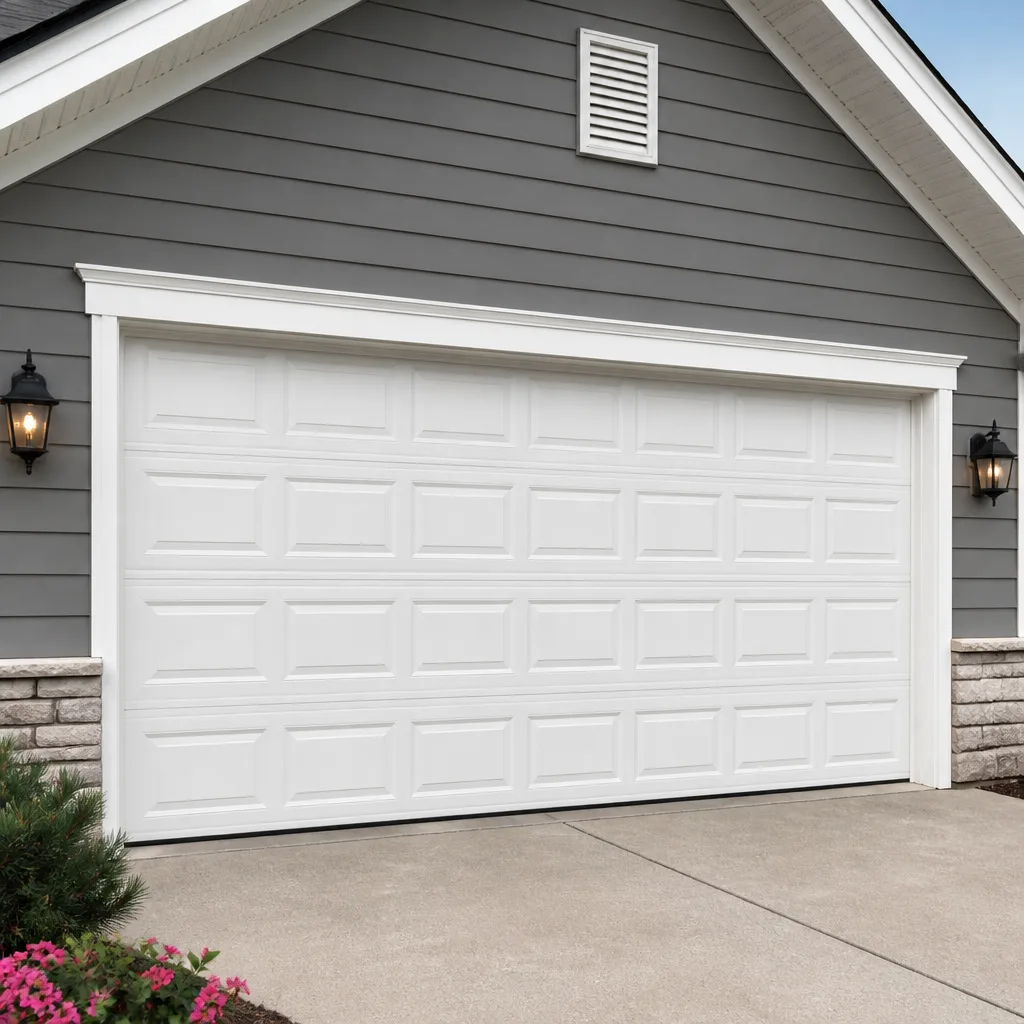 Raised-panel steel
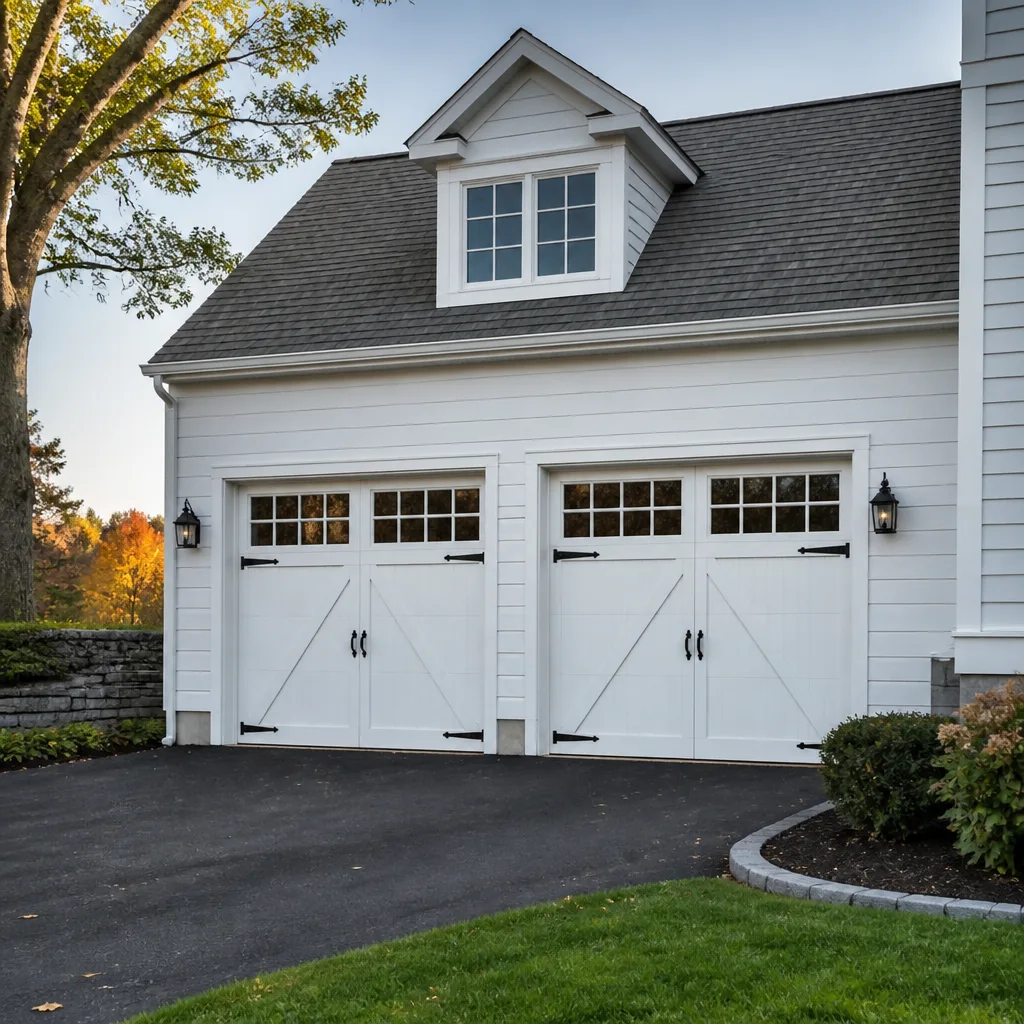 Carriage house
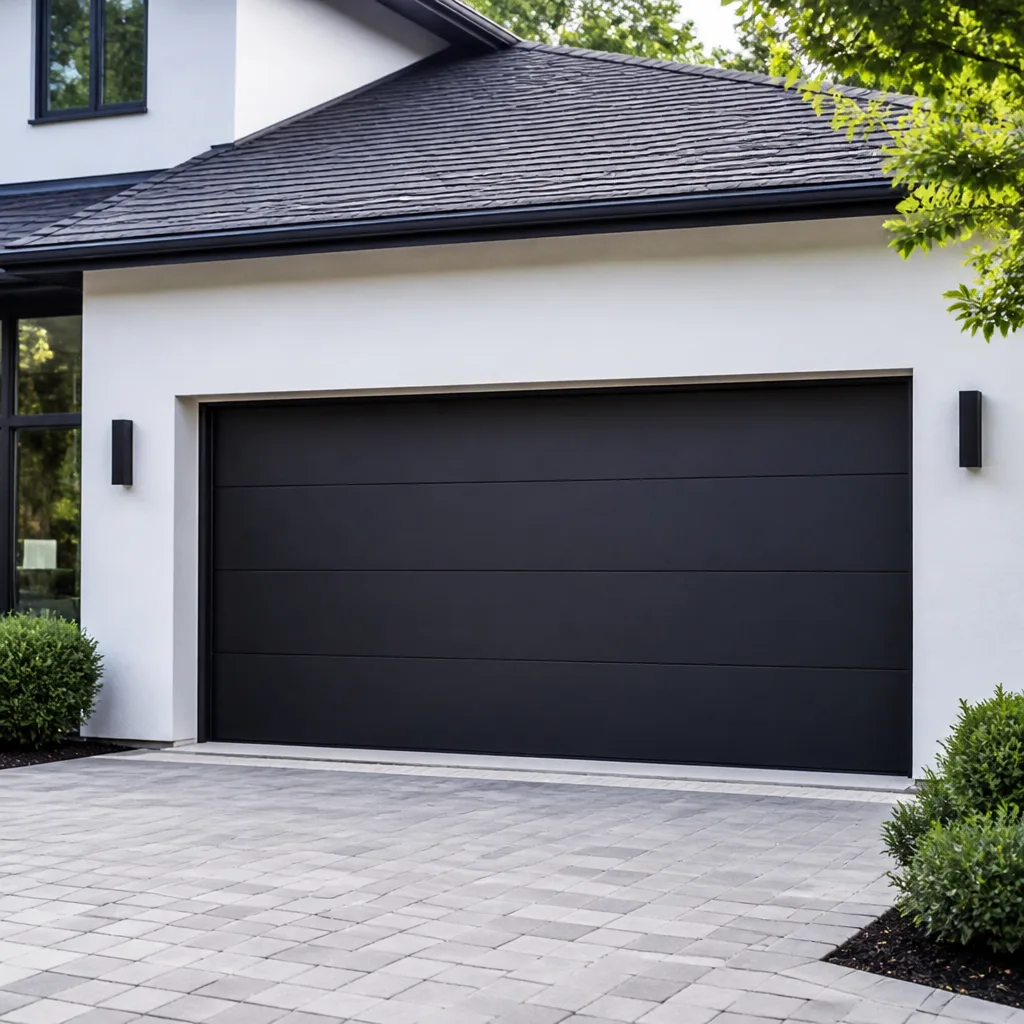 Modern flush
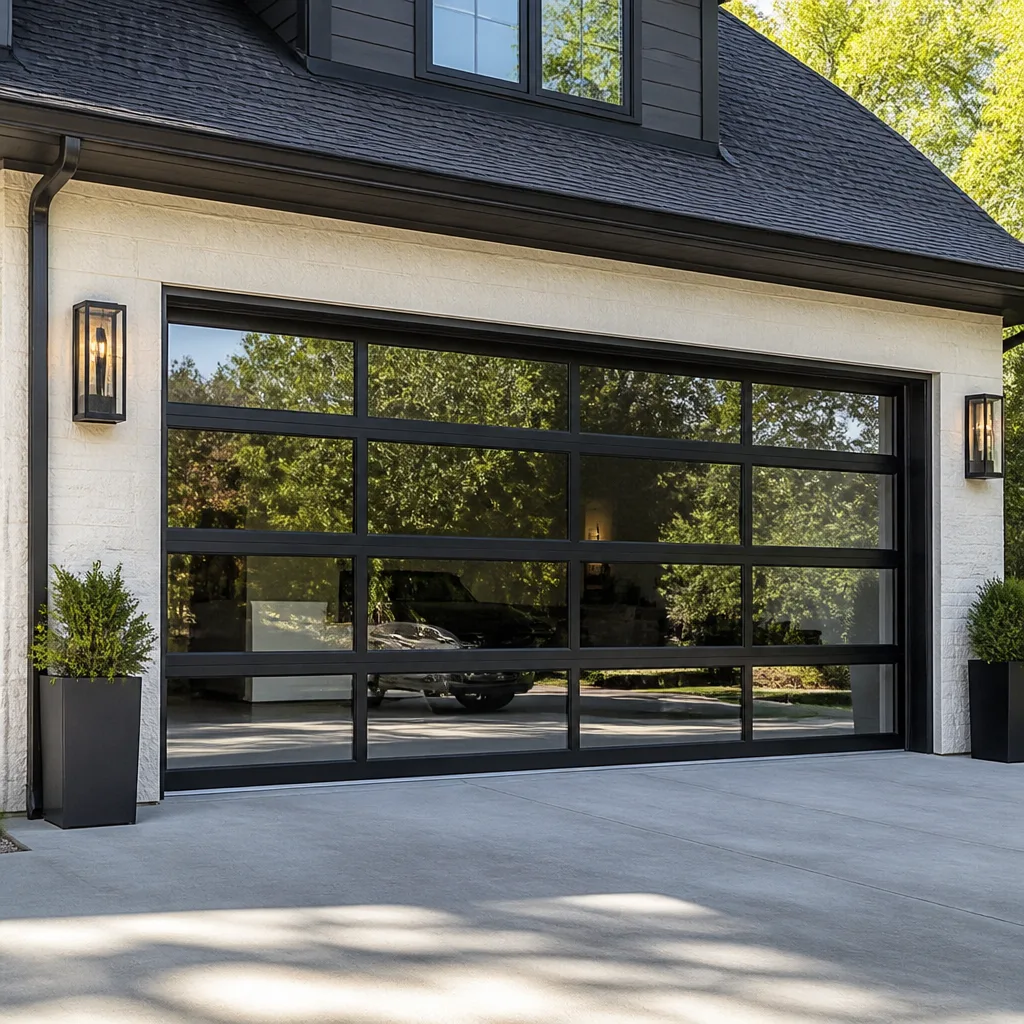 Full-view glass
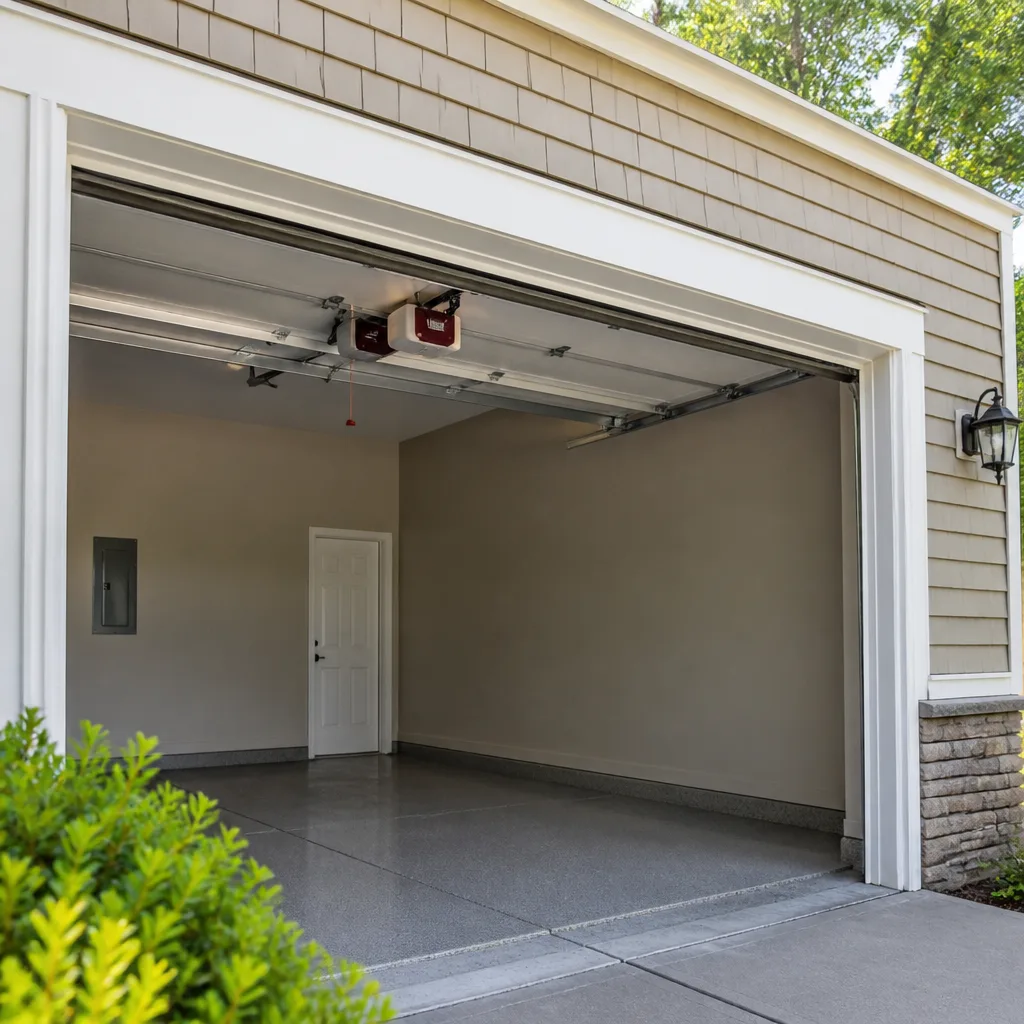 LiftMaster openers
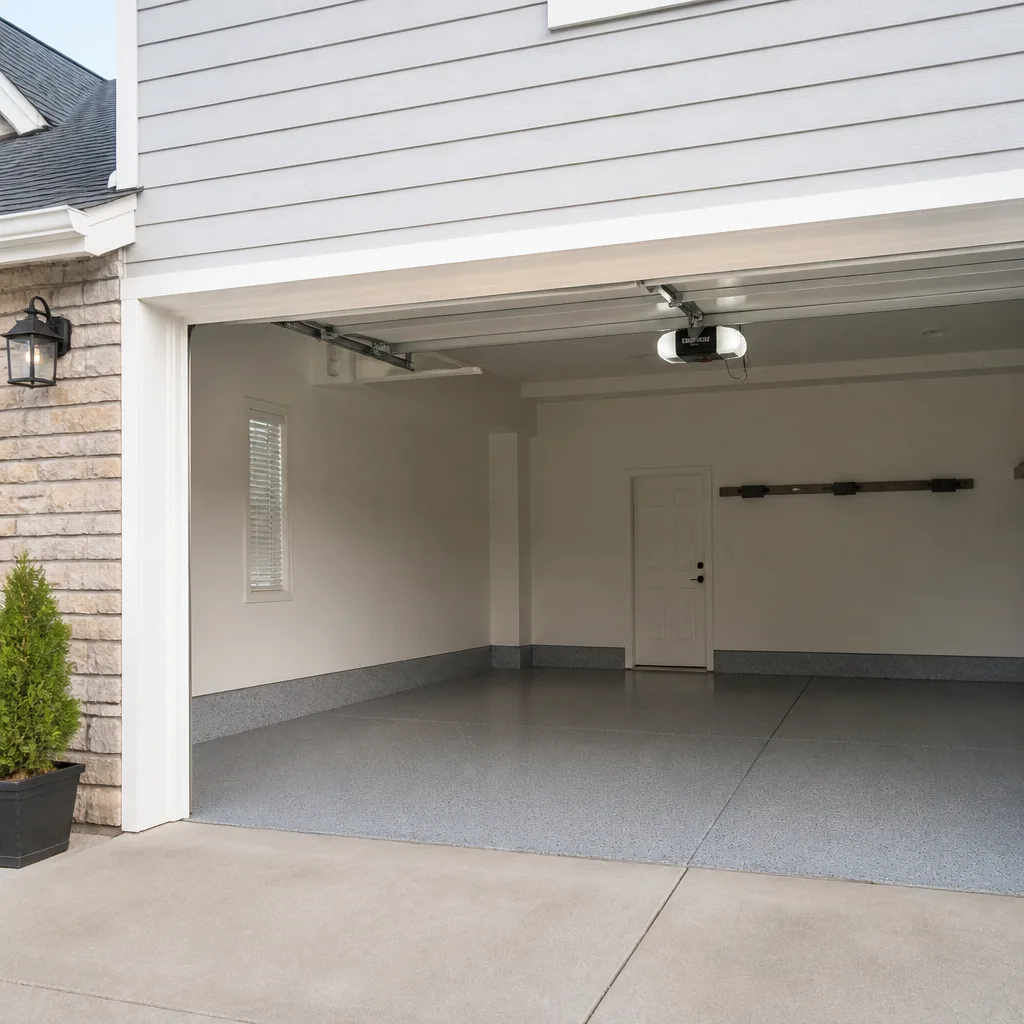 Chamberlain openers
Full 25-point door and opener safety check with every visit - springs, cables, rollers, tracks, and your LiftMaster or Chamberlain opener included
You get a price before we start. It does not change when the pro arrives.
Get your free estimateHow to Hire a Garage Door Contractor in Elgin: A Step-by-Step Guide
Illinois doesn’t require a specialty license to work on garage doors. That single fact reshapes everything about hiring one. There’s no state database to check, no specialty credential a contractor either holds or doesn’t. The proof you need is the proof you ask for yourself: general liability coverage, workers’ comp, real multi-brand experience, and a quote that shows its math. Most homeowners skip precisely those questions because a broken door feels urgent and the first polite voice on the phone sounds competent. This guide walks you through the steps that actually separate a specialist from a handyman with a spring tool, so you can hire well in Elgin the first time.
Quick Answer
To hire a garage door contractor in Elgin, verify four things before you book: proof of general liability insurance and workers’ comp, demonstrated experience with your specific door and opener brand, a written line-item quote that separates parts from labor, and a written warranty covering both. Ask whether the contractor services multiple brands or only sells one. Get the estimate in writing, confirm the price is agreed before work starts, and never approve a full replacement before a technician has actually diagnosed the failure.
Styles & brands we work with
- Raised-panel steel
- Carriage house
- Modern flush
- Full-view glass
- LiftMaster openers
- Chamberlain openers
Table of Contents
- Why hiring a garage door contractor in Elgin takes more care than it seems
- Multi-brand experience vs. brand-exclusive dealers
- The insurance questions that actually matter
- How to read a garage door quote
- Red flags specific to garage door contractors
- Same-day availability and what it means for pricing
- Springs, cables, and the safety question
- The step-by-step hiring process
Why hiring a garage door contractor in Elgin takes more care than it seems
Garage doors look simple from the driveway. A panel, some tracks, a motor. In practice a residential door is a balanced mechanical system under serious spring tension, and the opener is a separate electromechanical device with its own logic board, safety sensors, and limits. A contractor who understands one half of that system and not the other will misdiagnose half the jobs they touch. That’s why “I can fix that” is not a credential in this trade.
Elgin adds its own wrinkles. The housing stock runs from century-old homes near the Fox River to newer subdivisions on the west side, and the garage doors match that spread. You’ll find older Craftsman openers still chugging along in one driveway and a myQ-enabled LiftMaster in the next. A contractor who only knows one product line will either fumble the unfamiliar system or steer you toward replacing it with something they sell. Neither is what you want.
The good news is that vetting takes maybe twenty minutes of questions. Below is what to ask, what the answers should sound like, and where the honest ones differ from the rehearsed ones. If you already know you need help and want a starting point, the team behind Ridgeway Garage Door Repair works on most of the door and opener brands you’ll find in Elgin garages.
Multi-brand experience vs. brand-exclusive dealers
A brand-exclusive dealer sells one product line, and their quotes tend to reflect that. Ask a dealer who only installs one manufacturer’s doors to repair the Clopay or Wayne Dalton already hanging in your garage, and the conversation usually turns toward replacement. That isn’t necessarily dishonest; it’s the path of least resistance for a business built around a single supply chain.
A multi-brand specialist works the other way around. They start with what you have. In our experience, most failures are repairable, most parts are matchable across brands, and the honest answer to “can this be fixed?” is usually yes. That changes your quote in concrete ways:
- Diagnosis comes first. A multi-brand technician checks the balance, the springs, the cables, the rollers, and the opener logic before proposing anything.
- Repair is quoted before replacement. You should see the repair option in writing, not just the new-door option.
- Parts get matched, not swapped. Replacement panels and hardware for Clopay, Amarr, Wayne Dalton, and Raynor doors can usually be sourced to preserve the existing look and fit.
- Openers get treated as their own system. LiftMaster, Chamberlain, Genie, and Craftsman units all have distinct quirks. A contractor fluent in all four diagnoses faster and guesses less.
The practical question to ask is simple: “Do you service the brand I already have, or do you primarily install one brand?” The answer tells you whether you’re getting a technician or a salesperson.
The insurance questions that actually matter
Ask specifically for a certificate of insurance showing both general liability and workers’ compensation, and ask that it be emailed to you before work begins. A verbal “yes, we’re insured” is worth nothing. A certificate is a document from the insurer that names the coverage, the limits, and the dates. If a contractor hesitates to send one, that’s your answer.
Why both kinds of coverage? General liability protects your property if a door panel gets dropped through the drywall or a track tears loose. Workers’ comp protects you from liability if a technician is injured on your property. A contractor without workers’ comp is a contractor whose medical bills could, in the worst case, come back to the homeowner. It’s a dull piece of paperwork and it’s the single most important document in the hiring process.
Two follow-up questions worth asking:
- “Is the certificate current through the date of my job?” Policies lapse; a certificate from two years ago proves nothing.
- “Are the technicians employees or subcontractors, and who is covered?” The answer should be clear and immediate.
In Illinois, without a specialty licensing board to check, insurance is the credential. Treat it that way. If you’d rather start with a company that can produce documentation on request, we’re happy to talk it through when you call for garage door repair.
How to read a garage door quote
A good quote tells you how the contractor thinks. Line-item parts plus itemized labor means the technician diagnosed a specific failure and priced the fix. A single flat number with no breakdown usually means someone is pricing to a template or guessing at the likely cause. Both styles can produce an accurate total, but only one shows its work.
What a well-built quote should include:
- Parts, named. “Two torsion springs, matched pair” is a real line item. “Spring repair” is not.
- Labor, separated. Even a rough split tells you the contractor knows the job’s scope.
- Opener model and rail type if an opener is involved, so you can compare like-for-like across quotes.
- What’s not included. Haul-away, disposal, and any needed track or panel work should be spelled out.
- The total, agreed in writing before work starts.
Be wary of any quote that can’t tell you whether the springs are torsion or extension. Those are different systems with different failure modes and different parts, and a contractor who doesn’t distinguish them hasn’t looked closely enough. When you ask a company like garage door opener repair specialists to price a job, watch whether they ask which opener model you have before quoting. The ones who do are diagnosing; the ones who don’t are estimating blind.
Red flags specific to garage door contractors
Most trades share a set of warning signs: pressure, vagueness, a price that changes on the day. Garage door work has its own version of each. Watch for these:
- Vague spring descriptions. If the quote says “replace springs” without torsion vs. extension, wire size, or a matched pair, the contractor may not know what’s in your door.
- Pressure to replace before diagnosing. A door that won’t open is usually a spring, cable, or opener issue. Pressing for a full replacement before anyone has looked is a sales tactic, not a diagnosis.
- No written warranty on parts and labor. Ask for it in writing. A verbal “we stand behind our work” isn’t a warranty.
- No insurance documentation. If the certificate never arrives, the job never starts.
- Quotes that change once the technician arrives. Small surprises happen, but a written quote should hold unless you approve a change.
- One-brand-only framing. A contractor who can only work with one manufacturer’s parts will eventually steer you toward that manufacturer.
- Unclear ownership of the opener logic board. Openers and doors are separate systems. A contractor who treats them as one usually lacks depth on both.
None of these are absolute proof of a bad contractor. Any one of them alone is a question worth asking before you sign.
Same-day availability and what it means for pricing
A door that won’t close is a security problem, and same-day service matters. A new door install is a scheduled project, and same-day shouldn’t be part of the conversation. Those are different categories of work, and the contractor should treat them differently too.
When a repair genuinely needs same-day attention:
- A car is trapped inside, a door is hanging open, or a spring has snapped and the door won’t lift safely.
- You can’t secure the house otherwise, and a same-day visit is available.
- The failure is a known, repairable issue that a trained technician can diagnose and fix in a single visit.
When it makes sense to wait for a scheduled visit:
- A new door or opener installation. That work involves measuring, ordering, and scheduling, and rushing it helps no one.
- Cosmetic issues, weatherstripping, and routine adjustments that don’t affect security or safety.
- Any repair where the spring or cable is holding but the door operates; there’s no reason to pay for urgency you don’t need.
One point on pricing: the written estimate sets the price. Ask for it before work begins, and confirm the total in writing. If a contractor pressures you to skip that step because the job is same-day, that’s the moment to slow down.
Springs, cables, and the safety question
Torsion springs, extension springs, and the cables that run with them are under serious stored energy. When one fails, the release is sudden and violent. There’s a reason the industry treats this as a trained-professional job: the tools required, the winding procedure, and the risk to hands and eyes all sit outside what a homeowner should take on. This guide won’t give you a DIY walkthrough because the danger is real, not theoretical.
What you can do safely is observe and report. Look at the spring above the door: is it intact, or has a coil separated? Are the cables in the tracks evenly tensioned, or is one slack? Does the door balance at mid-height when you lift it by hand, or does it drop or resist? Those observations help a technician diagnose before arriving, and none of them require touching the spring hardware.
When you call, describe what you see in plain terms. “The door comes down hard and the spring above it looks separated” gets a faster, more accurate response than “it’s broken.” If you suspect a spring or cable failure, don’t run the opener; that can make the situation worse. Call a trained professional. If the opener itself is the problem, that’s a separate and usually safer diagnosis, and a specialist familiar with your system can sort it out.
The step-by-step hiring process
Here’s the sequence, in order, that gets you a competent contractor without wasting a week.
- Identify what you have. Find the opener’s model name (usually on a label on the motor housing) and note the door’s brand if it’s visible. This single step makes every later question easier.
- Ask about multi-brand experience. “Do you service my brand, and do you also work on other brands?” A specialist says yes to both.
- Request insurance documentation. General liability and workers’ comp, in writing, current through your job date.
- Get two or three written quotes. Compare line items, not just totals. Ask each contractor to separate parts from labor.
- Ask what happens if the diagnosis is wrong. The answer should be a written warranty on parts and labor, not a verbal promise.
- Confirm the price is agreed in writing before any work starts. If it isn’t, don’t proceed.
- Ask about the specific brand’s parts availability. Clopay panels, Raynor hinges, LiftMaster logic boards, and Chamberlain accessories all have different supply chains; a specialist knows the difference.
- Schedule the visit. For repair, ask about same-day availability if you need it. For install, expect a measure-and-quote visit followed by a scheduled install date.
That’s the whole process. It takes less time than a trip to the hardware store, and it’s the difference between a one-visit fix and a repeated one. If you’d like this handled for you, our team in Elgin handles the full sequence of repair, opener repair, and installation under one company.
Common Mistakes to Avoid
- Hiring the first voice that answers. A polite phone manner is easy; a certificate of insurance is not. Ask first, book second.
- Accepting a verbal insurance confirmation. Get the certificate in writing, and check that it covers your job date.
- Comparing flat totals across quotes. A $250 flat quote and a $350 line-item quote may describe different work. Compare parts and labor, not just the bottom line.
- Approving replacement before diagnosis. Most door failures are repairable. Press for a diagnosis and a written repair option before agreeing to a new door.
- Ignoring brand compatibility. A contractor who only works with one manufacturer’s parts will likely steer you toward that manufacturer. Confirm yours is on their list.
- Skipping the warranty question. A written warranty on parts and labor is the only warranty that counts. Ask for it before work begins.
- Letting the price change after arrival without a written update. A change is fine if you approve it in writing; a surprise invoice is not.
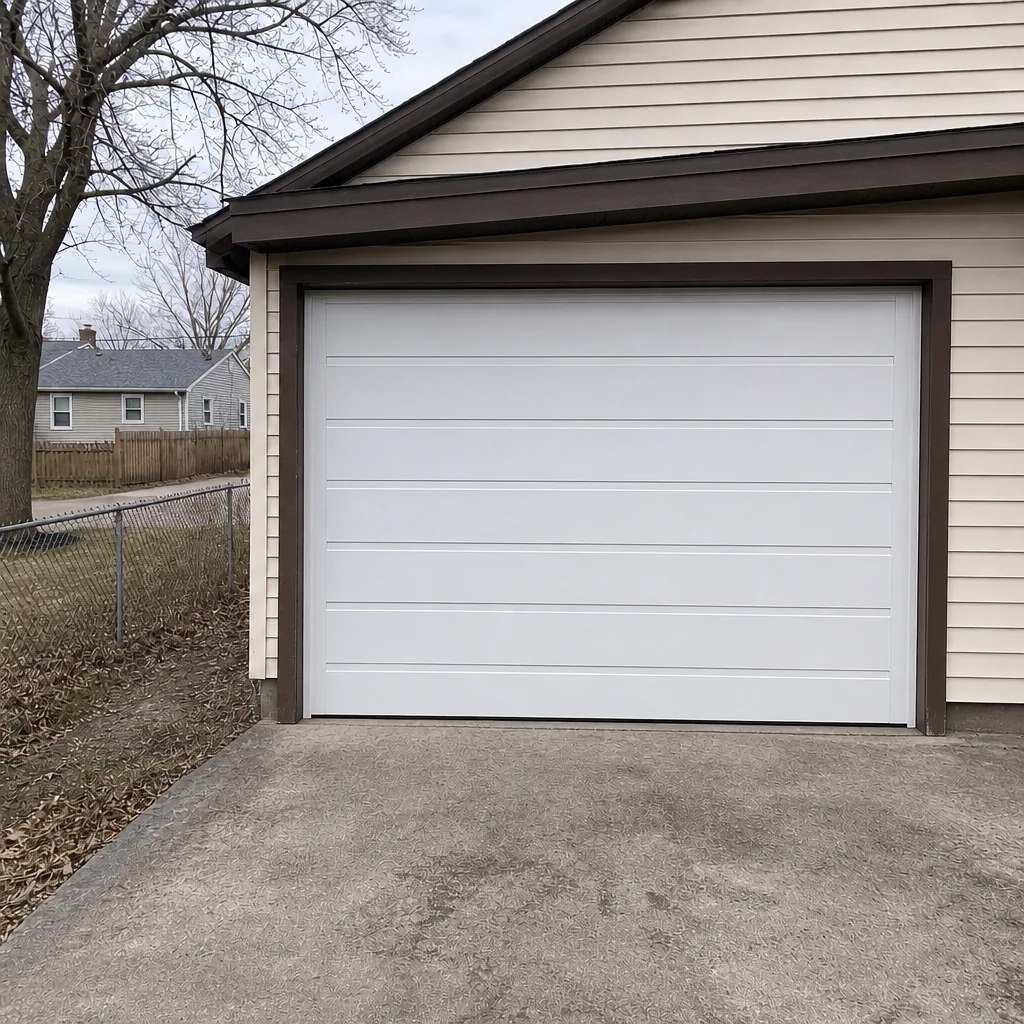
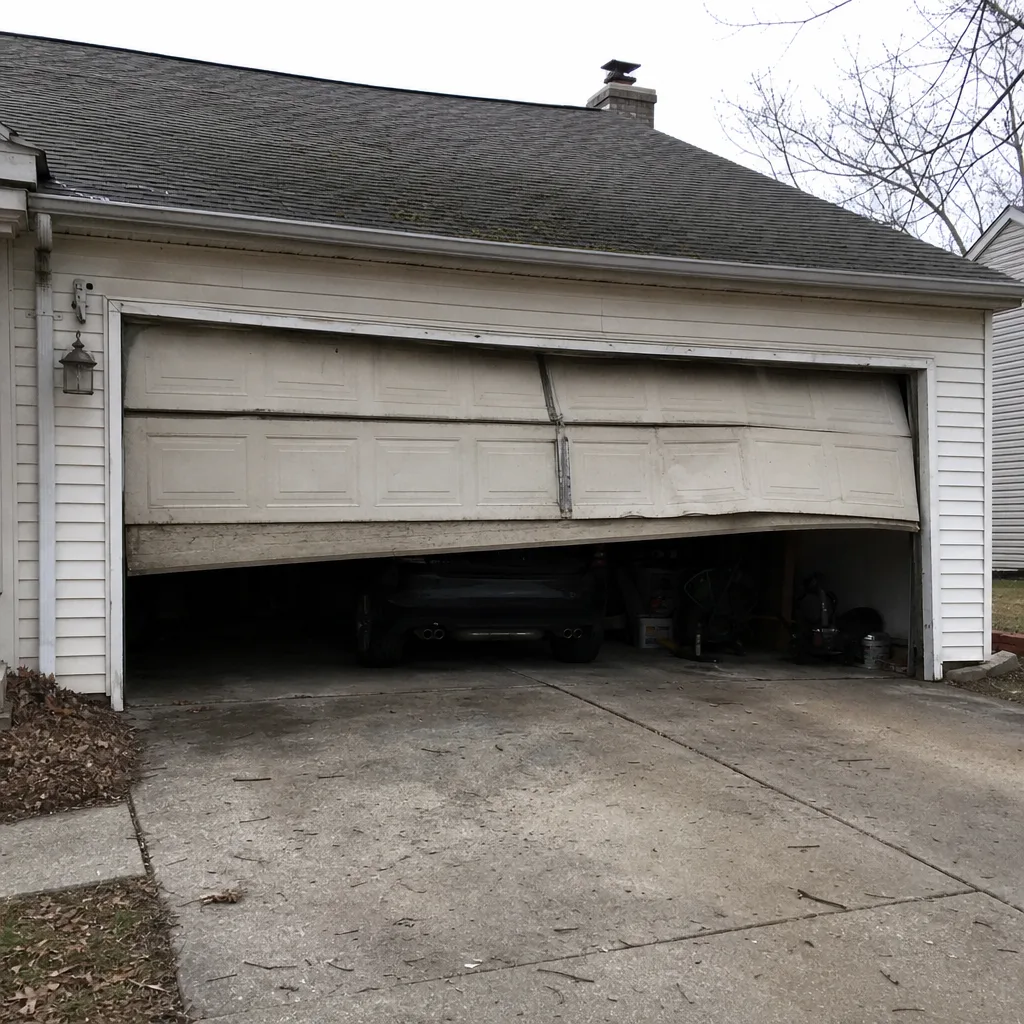
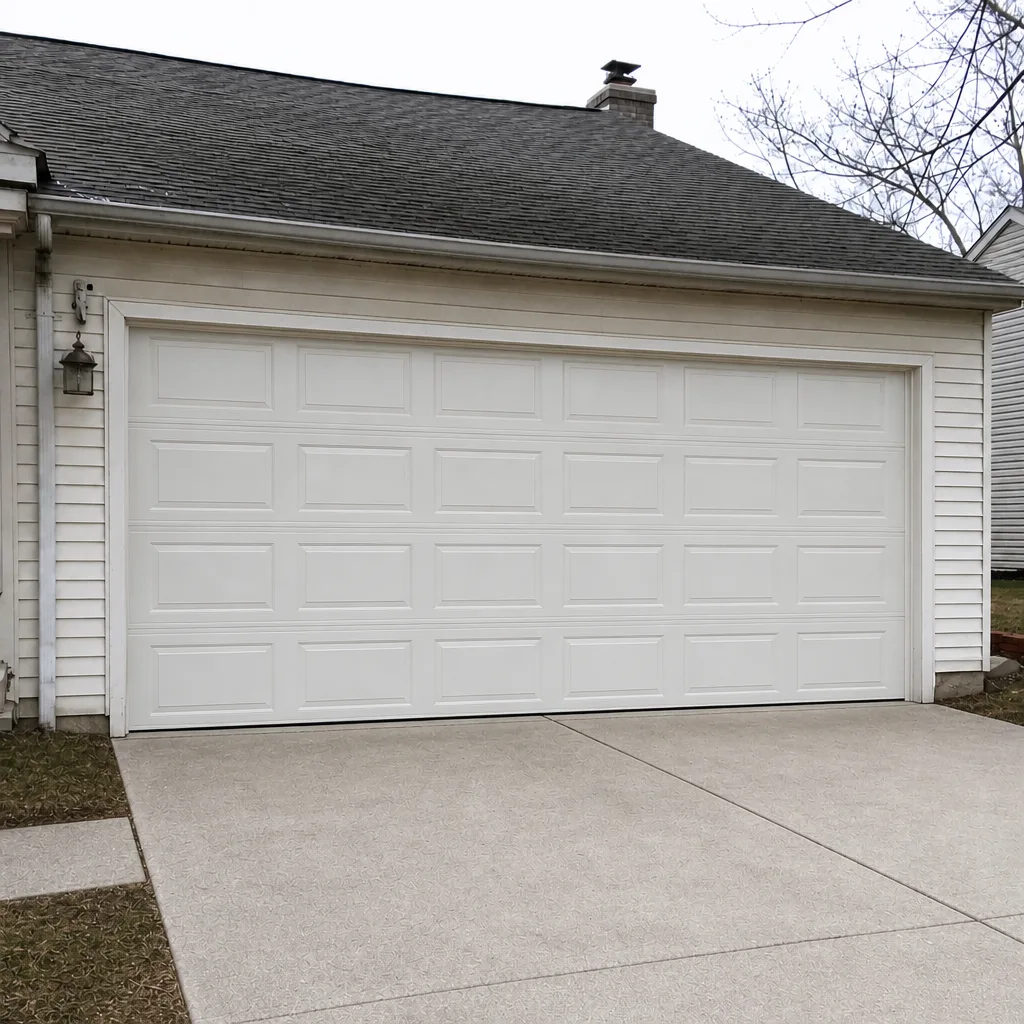
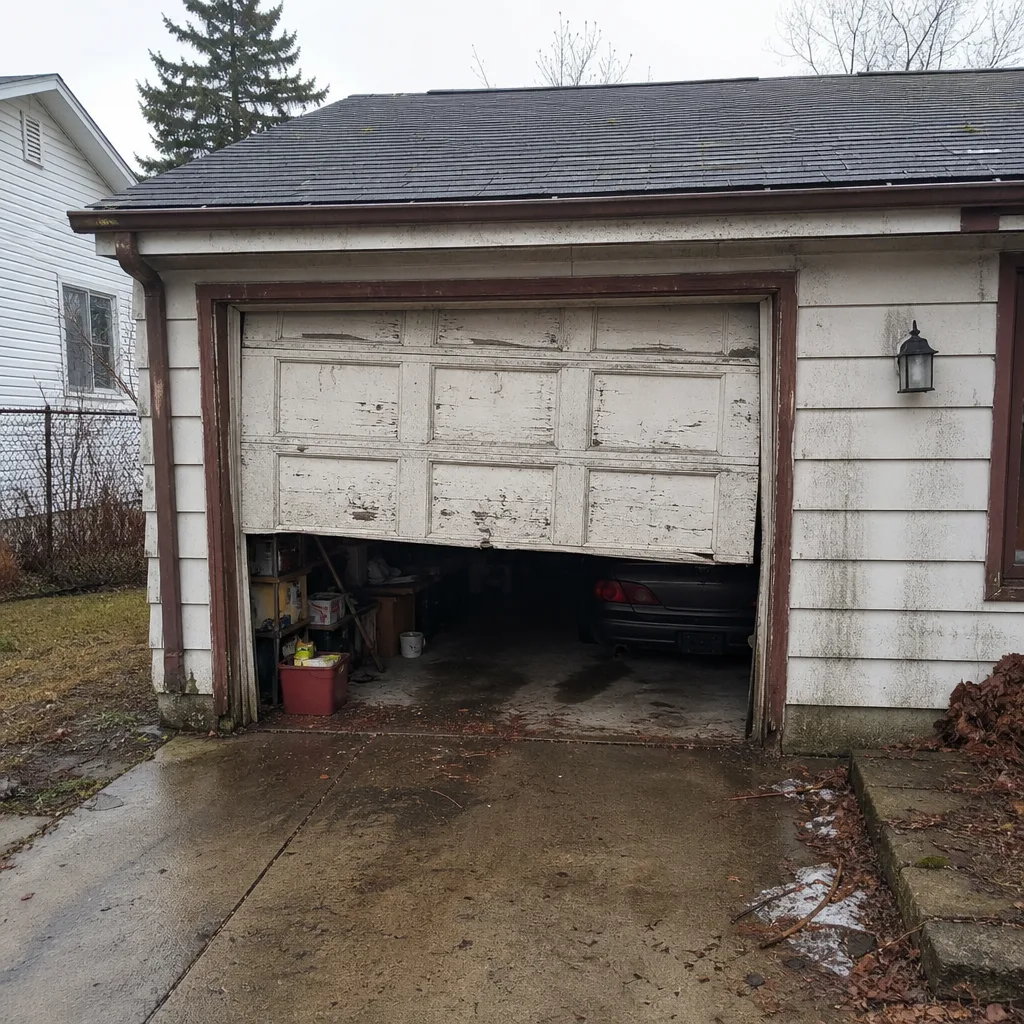
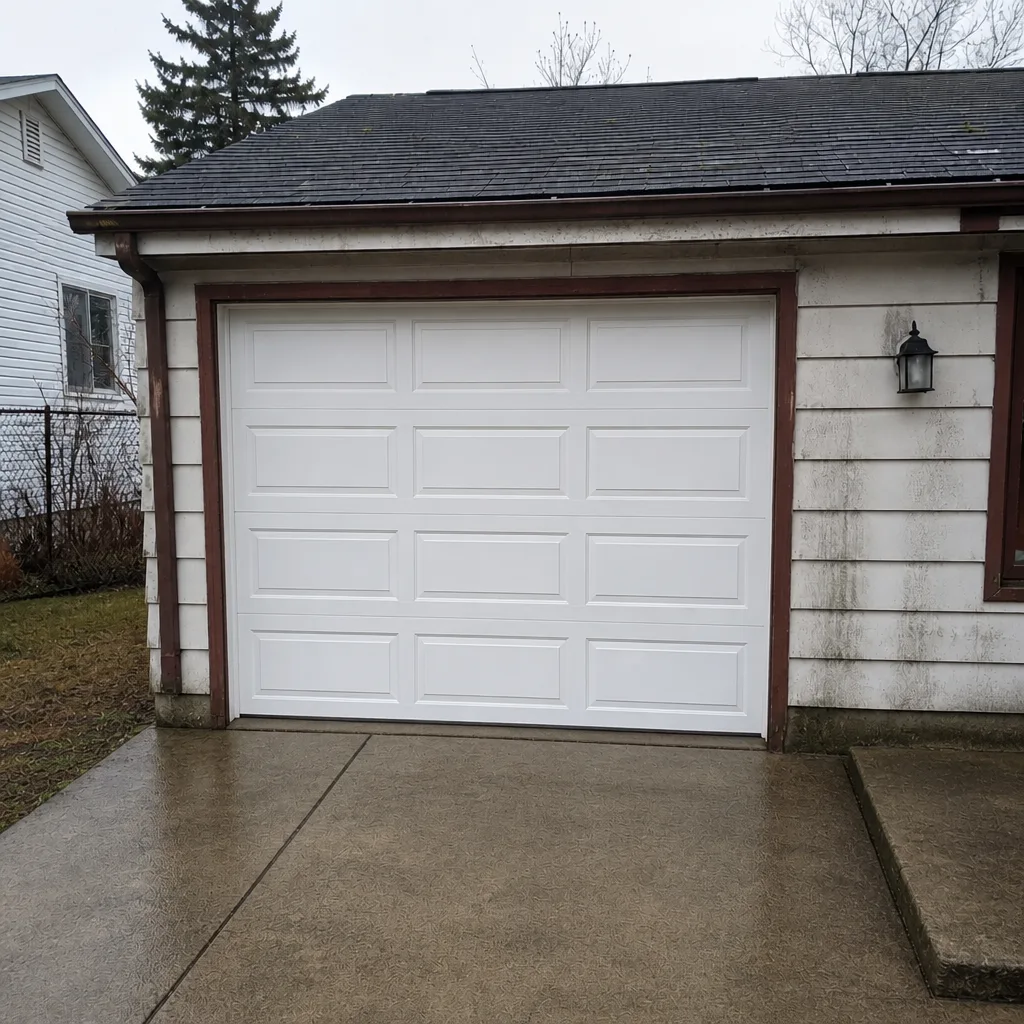
See the difference
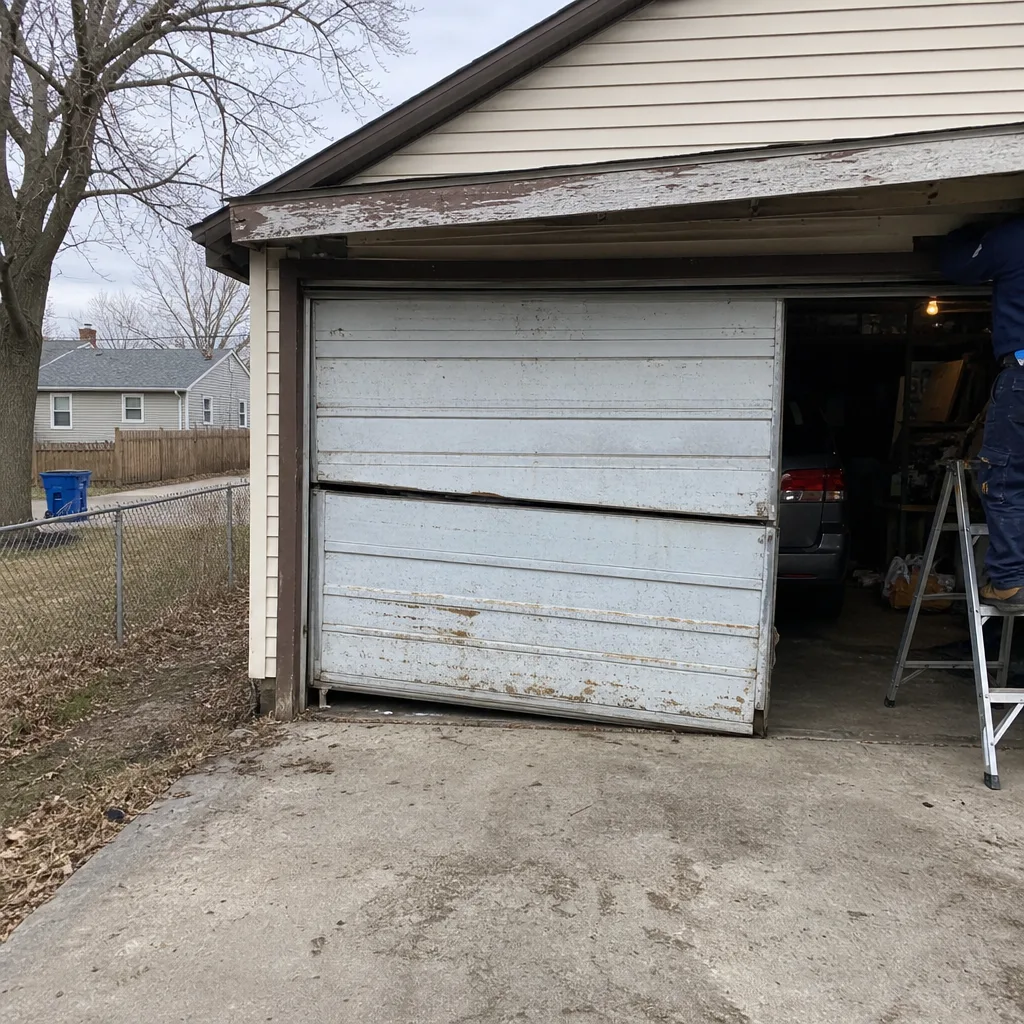 Before
 After
 Before
 After
 Before
 After
When to Call a Professional
Call a professional for any snapped or separated spring, any door that comes down hard or unevenly, any opener that reverses without an obstruction, and any cable that’s slack or frayed. Those are safety issues, and they don’t improve with time. Call if a door is physically stuck or off its track and can’t be secured otherwise. And call for a measure-and-quote visit if you’re planning a new door or opener installation; that’s a scheduled project, and the written estimate should come before any commitment. Ridgeway Garage Door Repair offers free estimates in Elgin. Call (844) 320-7553. We answer 24/7. Fast dispatch from 7am to 7pm, Sunday through Friday. Our technicians have up to 11 years of experience, and we work on what you already have before we recommend anything new.
Frequently Asked Questions
No, Illinois doesn’t require a specialty license for garage door work, so there’s no state credential to verify. That makes insurance documentation and demonstrated brand experience the credentials that matter. Ask for a certificate of general liability and workers’ comp before any work begins.
Ask whether they service multiple brands and whether they diagnose before recommending replacement. A specialist can tell you the difference between torsion and extension springs, knows your opener model, and quotes a repair option alongside any replacement option. A generalist usually prices a flat number without naming the parts. Call (844) 320-7553 for a free estimate if you’d like a specialist to take a look.
Yes, if a car is trapped, a door is hanging open, or the house can’t be secured otherwise. Call (844) 320-7553. We answer 24/7, with fast dispatch from 7am to 7pm, Sunday through Friday. A call outside dispatch hours is booked into the next opening. Don’t run the opener on a broken spring.
A written quote should name the parts, separate labor from parts, identify the opener model if one is involved, state what’s not included, and give a total you agree to before work starts. Ask for both torsion and extension spring work to be described specifically. The written estimate sets the final price.
Not without your written approval. A good contractor diagnoses on arrival, confirms the quote, and updates you in writing if the scope changes. A surprise invoice after the fact is a red flag. Call (844) 320-7553 for a free written estimate before you commit.
No, installation is a scheduled project, not a same-day repair. The process starts with a measure-and-quote visit, then a scheduled install once the door is ordered. Ask about matching your existing door brand, such as Clopay, Amarr, Wayne Dalton, or Raynor, if you want continuity.
The Bottom Line
Hiring a garage door contractor in Elgin comes down to four questions and one document. Ask whether the contractor services multiple brands, ask for a line-item quote, ask what the warranty covers, and ask about same-day availability only if the repair is genuinely urgent. Then get the insurance certificate in writing. Everything else is noise. A specialist who can name your springs, knows your opener, and puts the price in writing before work starts is the one you want, whether the job is a snapped spring or a full new door. Eight brands, one number: call (844) 320-7553 for a free estimate. We answer 24/7. Fast dispatch from 7am to 7pm, Sunday through Friday.
Contact
If you’d rather hand the vetting off to a specialist, Ridgeway Garage Door Repair is ready. We handle repair, opener repair, and installation under one company, and our technicians are familiar with the exact system in your garage. The estimate is free and the written quote is the price. Call (844) 320-7553 to book yours. We answer 24/7. Fast dispatch from 7am to 7pm, Sunday through Friday. Closed Saturday.
Written by the team at Ridgeway Garage Door Repair.